No. 188 Jinliu Road, High-tech Zone, Jinshan District, Shanghai City, China +86-15001719145 sales@seize-air.com
Follow Us -
Products
Water-Cooled Fixed-Speed Dry Type Oil-Free Screw Air Compressor
  • Water-Cooled Fixed-Speed Dry Type Oil-Free Screw Air CompressorWater-Cooled Fixed-Speed Dry Type Oil-Free Screw Air Compressor
  • Water-Cooled Fixed-Speed Dry Type Oil-Free Screw Air CompressorWater-Cooled Fixed-Speed Dry Type Oil-Free Screw Air Compressor
  • Water-Cooled Fixed-Speed Dry Type Oil-Free Screw Air CompressorWater-Cooled Fixed-Speed Dry Type Oil-Free Screw Air Compressor
  • Water-Cooled Fixed-Speed Dry Type Oil-Free Screw Air CompressorWater-Cooled Fixed-Speed Dry Type Oil-Free Screw Air Compressor

Water-Cooled Fixed-Speed Dry Type Oil-Free Screw Air Compressor

Water-Cooled Fixed-Speed Dry Type Oil-Free Screw Air Compressor for defined industrial air duties. Compare SWT airflow by pressure and specify the cooling-water, treatment and acceptance scope.

    A water-cooled compressor purchase begins with two duties: deliver the air that production needs, and transfer the heat into a water circuit that can accept it. The Water-Cooled Fixed-Speed Dry Type Oil-Free Screw Air Compressor is a SEIZE AIR SWT option for industrial stations where a defined air duty and a planned cooling service belong in the same equipment specification. Use the figures below to compare the catalogue selections, then carry the chosen pressure, cooling arrangement, air treatment and acceptance criteria into the request for quotation.

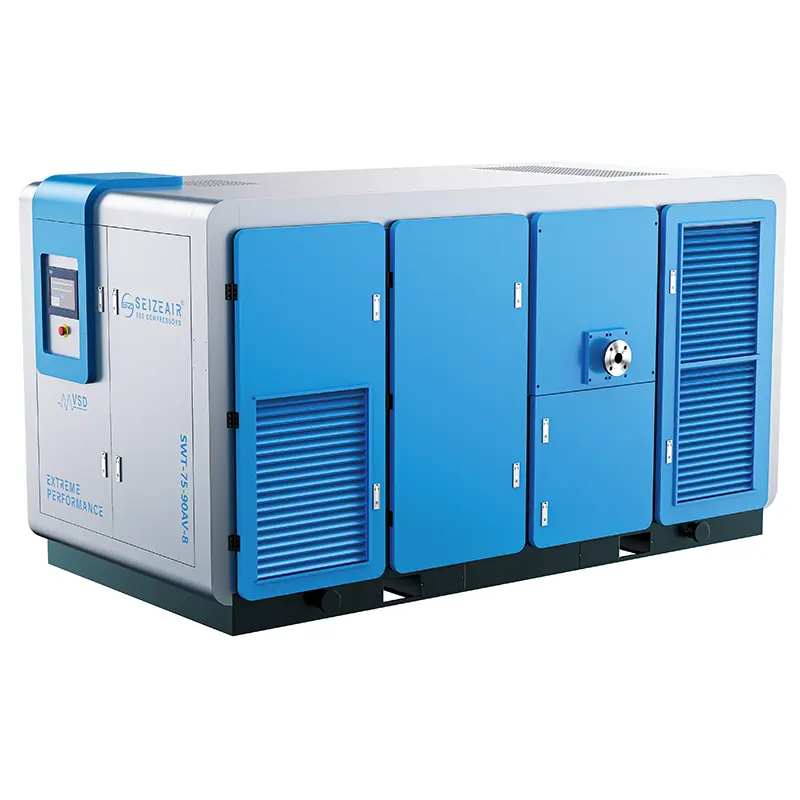
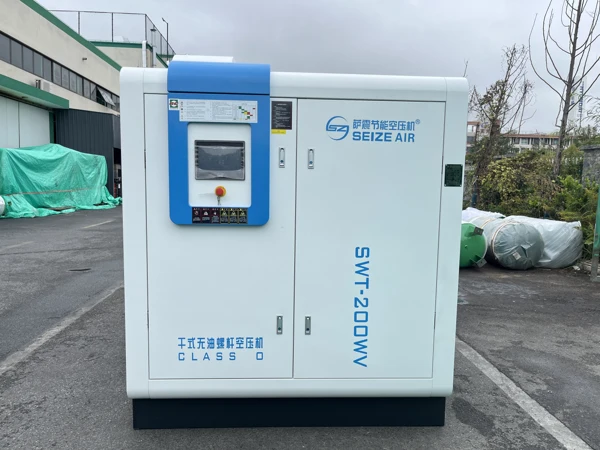
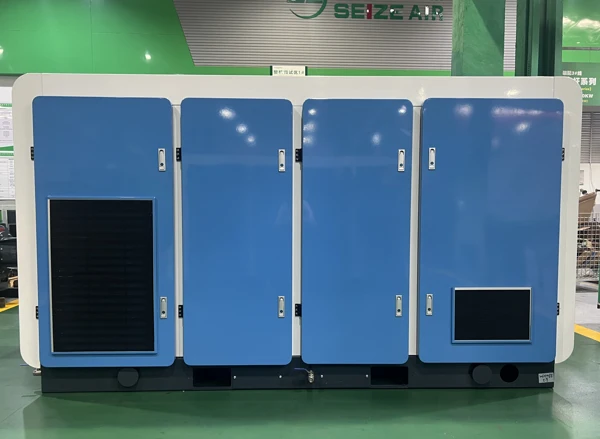
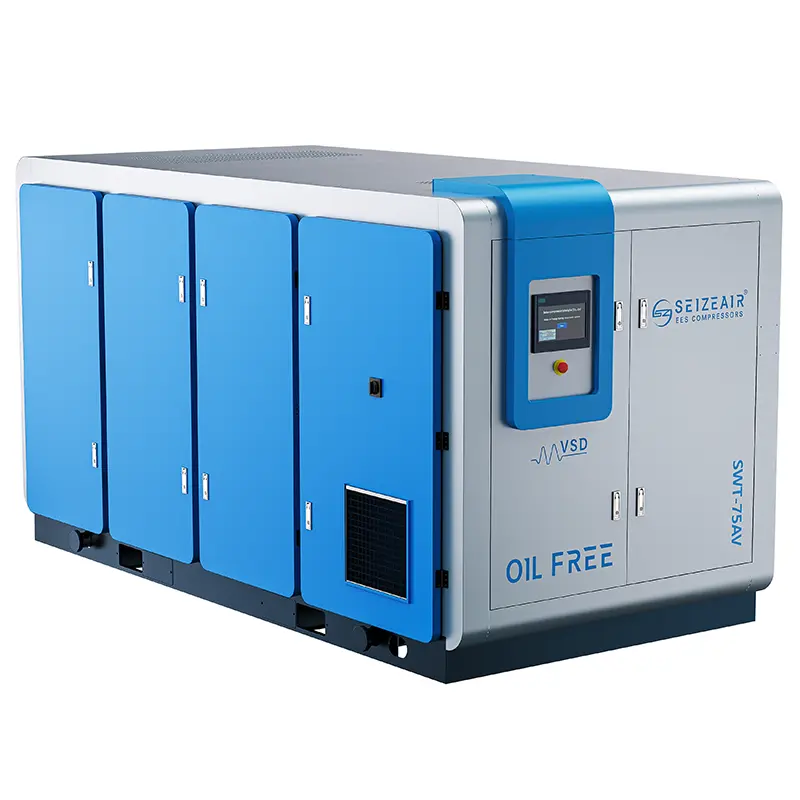
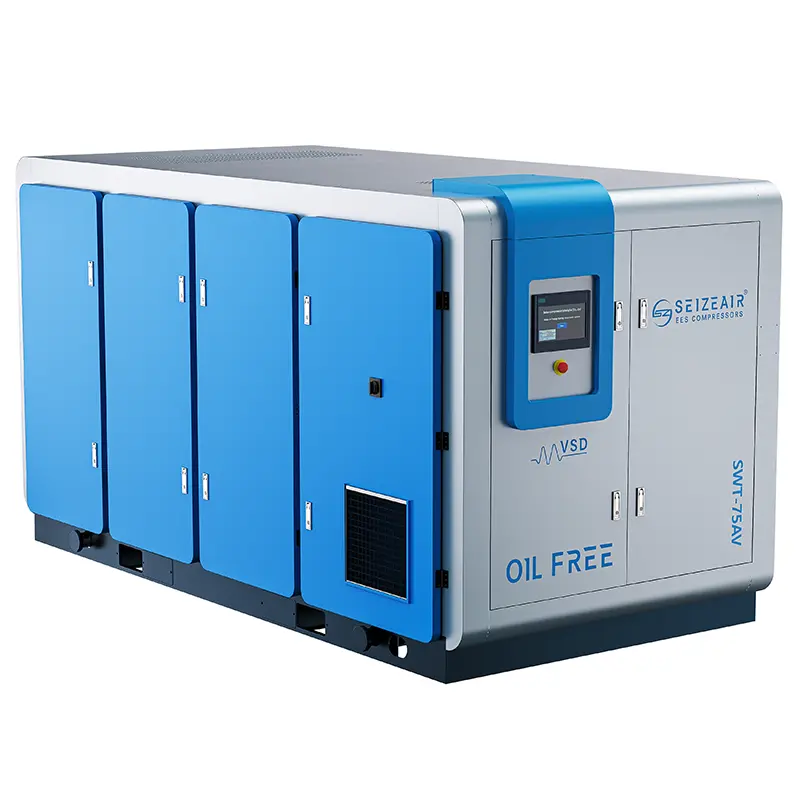
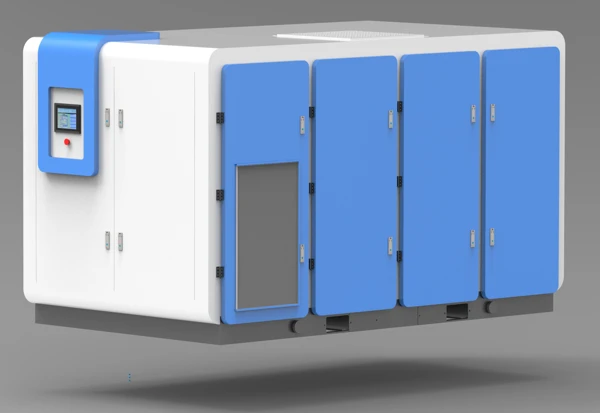
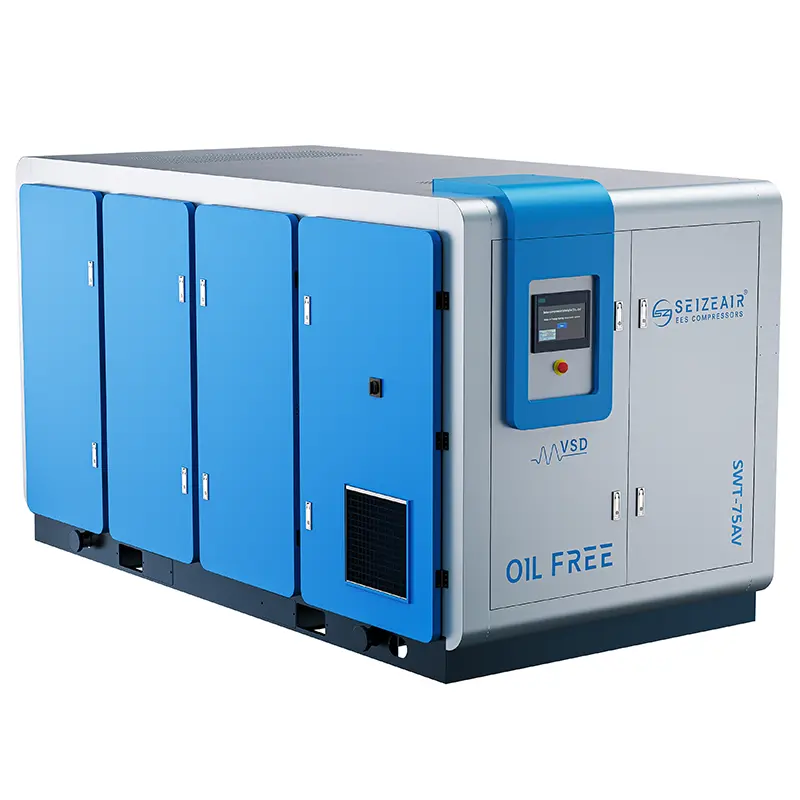
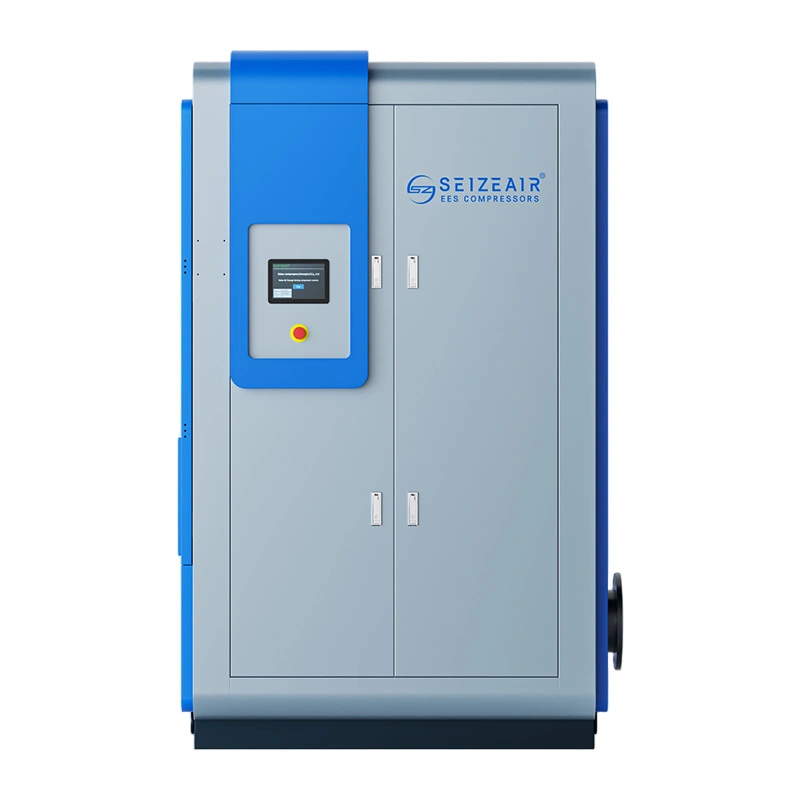
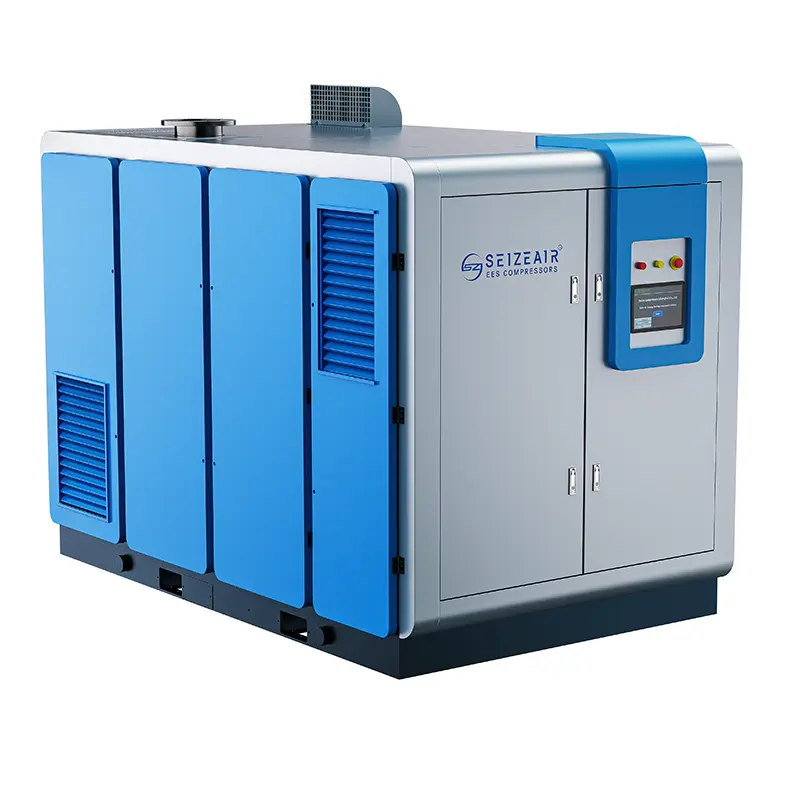
    Complete SWT-200WV water-cooled cabinet
    Same-family SWT-200WV variable-speed exterior. The catalogue tables specify the fixed-speed selections.

    Decide what the cooling water must support

    Ask for conditions at the machine, not at the cooling tower

    The available service is the water that reaches the compressor connections during the operating condition that drives the selection. A reading next to a cooling tower or pump does not establish what arrives at the package after distribution losses, mixing and competition from other users. Give the supplier the proposed circuit drawing and identify the location of each temperature, flow and pressure observation. For a new circuit, provide the utility designer's proposed conditions and identify which assumptions still need to be confirmed.

    Keep supply temperature, available flow and pressure at the connection as separate fields. A water circuit can show pressure while delivering too little flow through a restricted branch. A successful reading on a cool morning may not describe the water available when all production users are active. Agree on the seasonal and simultaneous loading conditions that matter, and obtain the equipment-specific requirements for the offered configuration before deciding whether the existing service is suitable.

    Separate a cooling capacity check from a pipework check

    The utility system needs enough capacity to reject the heat added by the compressor and other equipment connected to it. The branch also needs to carry the required water under the conditions available at its connections. These questions are related, yet they can point to different changes. A plant can have adequate total heat-rejection capacity and still have an unsuitable local branch. Conversely, a branch can pass the intended flow while its incoming water is warmer than the proposed equipment allows.

    Ask the responsible designers to record which boundary they are checking. The plant-water team should identify the availability of the service at the package; the compressor supplier should identify the conditions and connection information applicable to its offer. Put both on the same schedule. This is particularly useful when the package, cooling plant and installation piping are purchased from different parties, because each otherwise sees only part of the completed circuit.

    Specify how the circuit behaves when another user changes state

    If the compressor shares cooling water with furnaces, process equipment or other compressors, show which users can run together and how the utility system responds when their demand changes. Include operation during a production restart, a planned shutdown and maintenance of a shared pump where those states affect air availability. Normal full production is only one part of the selection. Some of the most consequential interruptions occur during transitions between otherwise acceptable steady states.

    Ask for a written description of the intended response when cooling water is unavailable or outside the conditions required by the offered machine. The responsible supplier and plant team should identify the relevant indications and agreed response; do not assume a particular interlock, automatic restart or monitoring feature without confirming the configuration. Operators need to know which equipment controls the service and which team can authorise a return to normal operation.

    Show where water treatment and inspection are managed

    Describe the type of water circuit, its treatment program and the quality information available for review. Ask the supplier to identify applicable water quality and maintenance requirements for the specific equipment. Do not carry limits over from another compressor or from an unrelated heat exchanger merely because it shares the same utility. The material and geometry of the offered equipment and the plant's treatment arrangements belong in the same review.

    Identify inspection and service access for components that may need attention. A drawing should leave enough room to reach connection points and perform the work specified for the selected package, even after nearby piping and structural supports are installed. Plan where water can be isolated and handled during authorised servicing. The final arrangement should be suitable for the plant's maintenance procedures as well as its installation schedule.

    Compare SWT selections at the pressure production needs

    Treat pressure and airflow as a pair

    The tables use the SEIZE AIR English dry oil-free compressor catalogue, edition 2025.10. The first gives published fixed-speed free air delivery at the listed pressure; the second uses the water-cooling mechanical entries. The names reproduce the catalogue family labels. Select the actual cooling configuration in the offer and carry the specified pressure through the quotation, equipment schedule and acceptance record.

    For example, SWT-90A/W is listed at 15.00 m³/min at 8 bar and 12.50 m³/min at 10 bar. SWT-132A/W shows 22.00 and 19.50 m³/min at those respective pressures. A change in pressure selection can therefore change the shortlist even if the production equipment remains the same. Compare the required delivery with the corresponding pressure entry rather than using the largest number in the row for every proposed duty.

    Family Motor kW FAD at 7 bar, m³/min FAD at 8 bar, m³/min FAD at 10 bar, m³/min
    SWT-75A/W 75 12.60 12.60 10.30
    SWT-90A/W 90 15.20 15.00 12.50
    SWT-132A/W 132 24.50 22.00 19.50
    SWT-160A/W 160 27.00 25.00 24.00
    SWT-200A/W 200 36.50 36.50 30.30

    Keep the published reference with the delivery figure

    The catalogue footnote gives complete-package free air delivery to ISO 1217 Annex C, with an absolute inlet pressure of 1 bar and an intake temperature of 20°C. Keep those reference conditions attached to the table when comparing proposals. When sending a site measurement, specify the instrument position and what reference basis its output uses. Flow measured or expressed at line conditions is not automatically the same quantity as catalogue free air delivery.

    Motor ratings are included to identify the selection, not to establish measured electrical demand. Use complete-package input at a stated duty if comparing energy, and define what auxiliaries belong to each comparison. A water pump or other cooling utility may sit outside the compressor package while still contributing to the electricity required by the station. Buyers comparing water-cooled and air-cooled equipment should state those boundaries explicitly rather than comparing isolated motor labels.

    Plan the air connection using the water-cooling mechanical row

    The SWT-75A/W water-cooled entry lists a DN80 compressed-air outlet, a 3200 × 1950 × 1810 mm package and a listed mass of 3000 kg. The SWT-200A/W water-cooled entry lists DN100, 3680 × 2020 × 2350 mm and 5350 kg. Those are mechanical selection details for the catalogue entries shown. They are not cooling-water connection sizes, service clearances or lifting instructions.

    Carry the selected model and cooling configuration into the layout review so that the machine footprint, service area, pipe approach and route into the room are reviewed together. Request the final equipment drawing and handling information before construction or delivery. Where an existing opening or crane route is shared, confirm that the proposed arrangement provides a practical way to place the equipment and service it later. An outline on a floor plan answers only part of that question.

    Water-cooled family Compressed-air outlet L × W × H, mm Mass, kg
    SWT-75A/W DN80 3200 × 1950 × 1810 3000
    SWT-90A/W DN80 3200 × 1950 × 1810 3200
    SWT-132A/W DN80 3350 × 1900 × 1900 3900
    SWT-160A/W DN80 3350 × 1900 × 1900 4000
    SWT-200A/W DN100 3680 × 2020 × 2350 5350

    Understand the air path and the separate mechanical circuits

    Locate the heat-transfer task inside the package

    The catalogue presents the SWT dry oil-free series as a two-stage screw arrangement. Compression raises air temperature; cooling between stages removes heat before the next stage, while discharge cooling manages the air leaving the compression train. The offered machine drawing and utility schedule should identify the heat-exchanger arrangements applicable to the selected package. Use those documents to match the specified air duty and the supporting cooling service rather than using an external photograph as a connection guide.

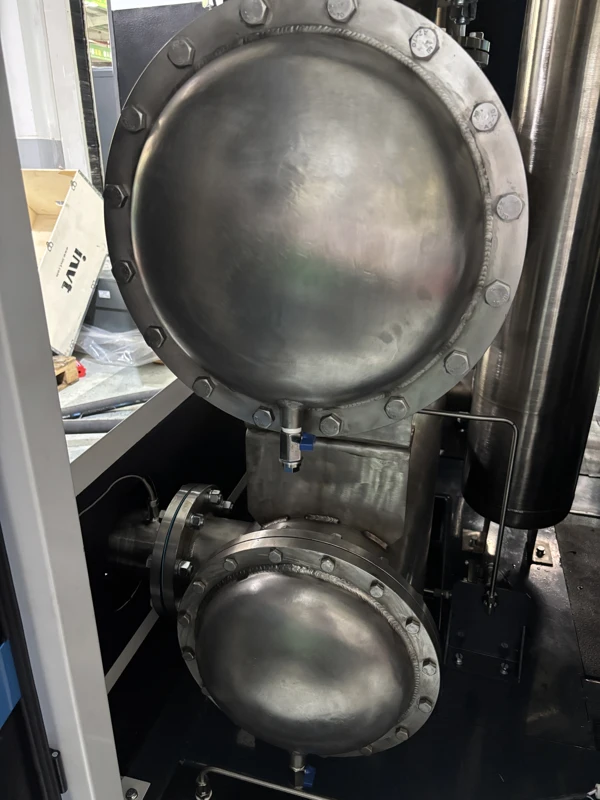
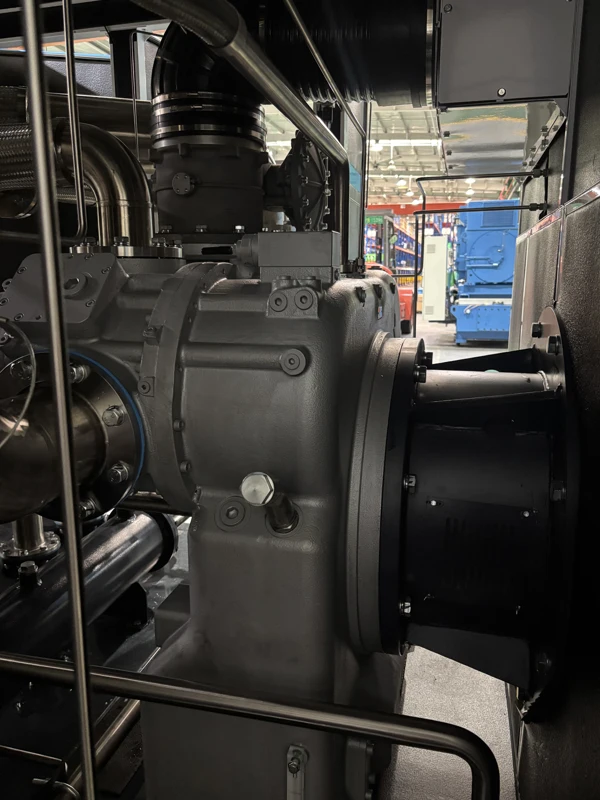
    Heat exchanger ends on a water-cooled SWT package
    Heat exchanger detail from a separate SWT water-cooled package; use the offered drawing for exact connections.

    An unusual temperature indication can follow a change in the cooling service, the compressor duty, the measurement or the condition of the equipment. Before assigning a cause, record the machine operating state and the relevant utility observations at the same time. A log of water conditions from one operating state should not be used to explain an air temperature recorded under a different load unless the relationship can be established.

    Dry oil-free compression and mechanical lubrication have different boundaries

    Dry oil-free describes the compression air path. Mechanical components outside that path may still have a lubrication circuit and service requirements. Ask for the applicable maintenance instructions and component identification for the offered equipment. Do not infer that the whole package has no oil-related service needs or that the delivery point meets a particular process specification merely from the words oil-free.

    The process owner should state the required air condition at the point where it matters. Particles, moisture and oil-related criteria are separate from the choice of compression technology. The supplied treatment, downstream distribution and verification arrangements should be considered together. If a certificate or independent report is part of the purchase, request the scope applicable to the exact configuration and the acceptance conditions rather than generalising from another machine or a company-level document.

    Prepare for moisture removal after cooling

    When air is cooled, moisture can condense under the applicable conditions. The collected condensate must be managed through the agreed separation and drainage arrangement. Identify the locations where condensate is expected to leave the compressed-air system, the responsible party for external collection and the access needed to inspect or service it. The cooling-water return is a different circuit and should have its own labelled connections and responsibilities.

    The same distinction helps the operating team diagnose a change. Moisture at a downstream connection does not automatically identify a cooling-water problem. Check the treatment state, drain observations and location where the moisture appeared. Compare them with the actual process operating state. If several machines share a header or treatment train, record which ones were in operation. An observation tied to the affected path is far more useful than a report that simply says the air was wet.

    Fit fixed speed to a defined station duty

    Match the loaded duty to the way production actually uses air

    The Water-Cooled Fixed-Speed Dry Type Oil-Free Screw Air Compressor is best evaluated against the planned role of the selected machine. For a sustained production load, describe the required pressure and useful delivery while the connected processes are running. For loads that vary, record the normal states and the duration of high and low demand as well as the peak value. This helps distinguish a steady supply role from events better addressed by station coordination or storage.

    Ask how the offered package operates when demand drops away, as well as how it supports the main production state. Do not assume a particular loading, unloading, stop or restart sequence from the fixed-speed designation. Establish the functions supplied and what the user is expected to do. In a shared station, confirm which machine serves the sustained load and which one responds as production changes. Assign the responsibilities before commissioning so that the observed response can be checked against a written plan.

    Review pressure at the user before changing the proposed setpoint

    Start at the process inlet and work backwards along the air path. Identify treatment equipment, common pipes and branch restrictions that can contribute to a pressure difference during flow. The required package outlet pressure should follow from the agreed design, rather than from a habit of selecting the highest catalogue pressure available. Moving to a higher pressure entry can reduce published delivery for the same model and change the selection.

    If a single user loses pressure while the source and main header remain steady, observe the route from the header to the user before raising the supply target. If the source and several users fall together, review the total concurrent demand and compressor response. Take the observations during the same production state. A gauge reading from an idle branch does not tell the buyer how much usable pressure reaches the equipment when it is actually drawing air.

    Treat standby supply as a separate design case

    State which process users must remain supplied while a machine is unavailable. Identify the available source, treatment route and supporting cooling services during that condition. A spare compressor connected to the same unavailable utility may not provide the intended continuity. Consider maintenance of the water circuit, air treatment and electrical installation as well as maintenance of the compressor itself.

    Where the project relies on an existing source, verify its capacity at the intended pressure with the users that will still need air during the standby condition. Ask the responsible site team to review compatibility, isolation and the approved transition back to the normal supply. The enquiry should describe the required outcome and identify who owns the connections and procedures. This makes the difference between a spare item in a quotation and a usable standby arrangement.

    Make the installation responsibilities visible before ordering

    Internal component on a water-cooled SWT package
    Related SWT package detail photographed through an open cabinet; shown for service planning context.

    Give each interface an owner and a reference drawing

    Separate the compressor package, its water branch, plant cooling service, air treatment, electrical supply and distribution into identifiable parts of the purchasing scope. For each party, agree which documents, materials and connection work it provides. Attach the offer to the model and duty actually selected. An equipment list showing a machine and a dryer does not establish who supplies the external piping, insulation or instrumentation needed to make the system work.

    Request the compressor's final general arrangement and interface information before fixing nearby services. If the machine is a replacement, mark the connections that remain and identify their condition. An existing water line that is physically close to the new equipment is useful only if it can provide the agreed service. Apply the same check to electrical capacity, air treatment and the ability to drain condensate. Keep any scope gap visible rather than deferring it to the installation contractor without instructions.

    Review the receiving route for the supplied package

    Use the final packing and handling information, not an approximate catalogue mass, to review unloading and movement into position. Identify the path, available lifting arrangement and temporary obstacles. Coordinate the receiving sequence with other construction or production activity. A package may fit in the room and still require a different installation sequence because the path is obstructed after neighbouring equipment is placed.

    At receiving, compare equipment identification and the supplied items with the order. Keep accessories and documents together with the machine they accompany. Record transport condition and any observable discrepancy before the equipment is enclosed by pipework or other permanent construction. These checks also help the team avoid fitting a connection item intended for a different unit where several machines arrive as part of the same project.

    Coordinate the electrical connection with plant standards

    The catalogue lists a standard supply of 380 V, 50 Hz, three phase and notes other voltages are available. State the actual site supply and ask for the offered configuration's electrical requirements. Do not use motor rating alone to determine the installation connection, protection or controls scope. The electrical designer needs the documentation applicable to the complete package accepted in the order.

    Describe the signals and status information the station needs, particularly if the compressor must work with an existing utility control system. Identify what operators need to see locally and which indications belong to plant monitoring. The suppliers should agree on the installed interfaces rather than assuming that one controller has control authority merely because it can see a signal. Keep the final wiring and functional information with the handover documents for the people who will support the system.

    Preserve cooling and access when equipment is installed in stages

    A water-cooled package still needs the installation environment defined for the offered configuration. Confirm the equipment's room conditions and any ventilation required for residual heat or other components. Cooling-water piping does not eliminate every environmental requirement. Discuss the final arrangement with the supplier if the room will be enclosed or if adjacent machinery will change the intake environment or block service routes.

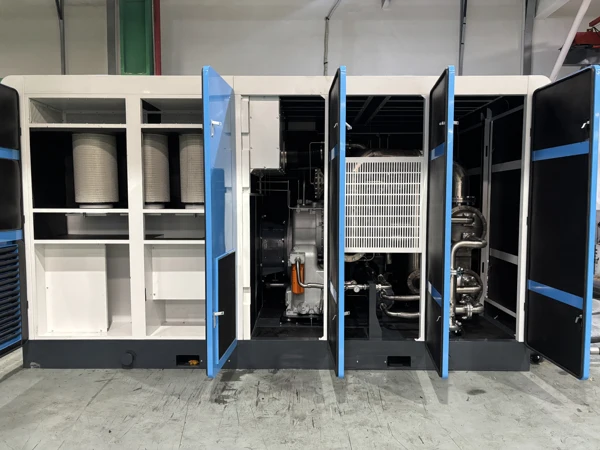
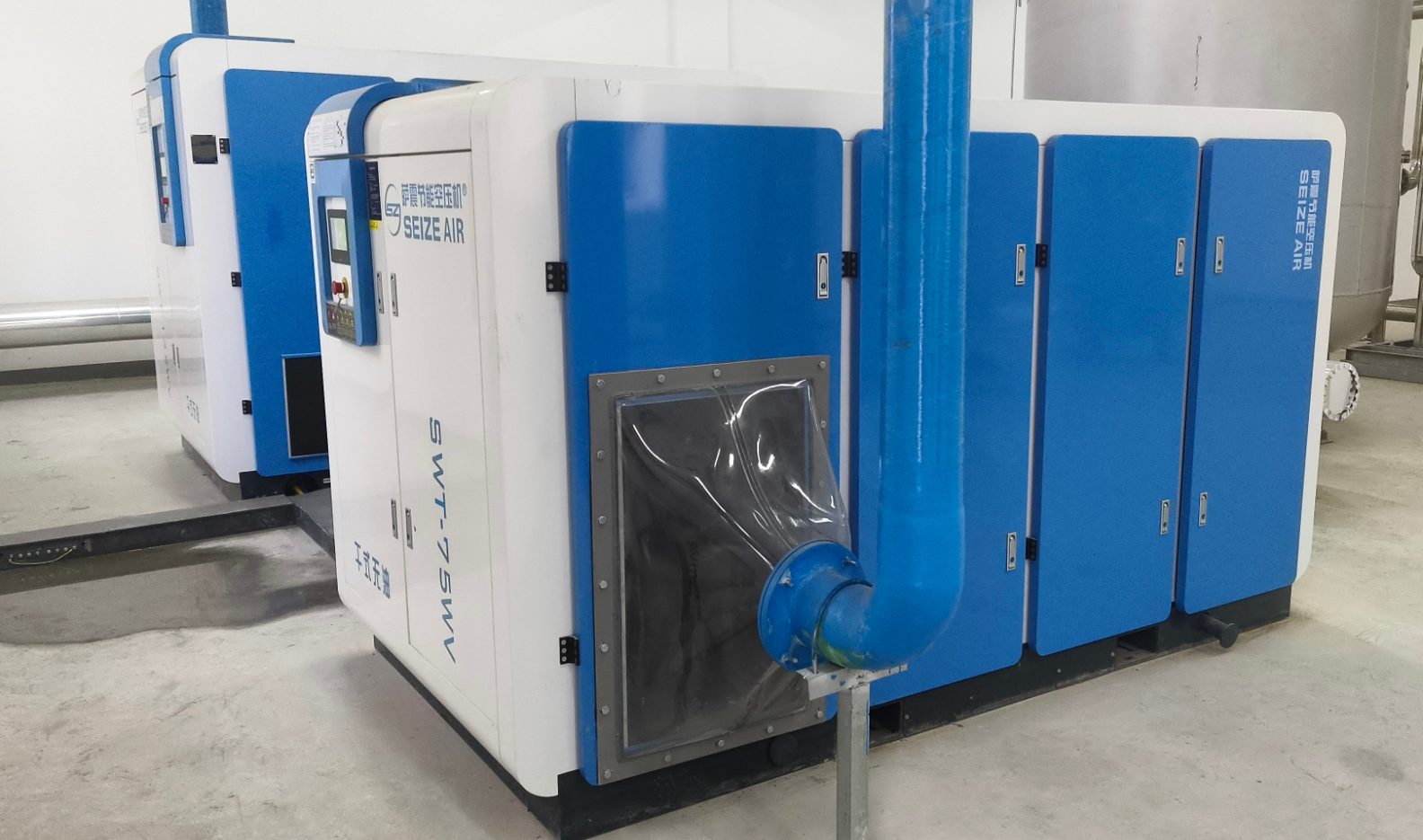
    Open water-cooled SWT enclosure
    Separate SWT package with panels open, illustrating why the installation must preserve service space.

    Allow for actual maintenance tasks rather than simply showing that a person can stand beside the cabinet. Ask which panels need to open, where components can be reached and which paths must remain clear for handling. The plant should identify how the associated circuits can be isolated for authorised work and returned to service. Put these requirements on the layout and include them in the final walk-through before the station is handed over.

    Use acceptance to verify the boundary you purchased

    Agree on observations before the first run

    Acceptance should connect the offered model, operating conditions and agreed measurement locations. Record the compressor identification, selected pressure, useful air duty and relevant cooling-water observations. If the scope includes delivered-air quality, identify the sampling point and the applicable method in advance. If energy or flow is being measured, write down the instrument and reference conditions. A number without that context is difficult to compare with the offer or reproduce later.

    Ask the responsible teams to identify when the applicable production state can be observed. A quiet shop may be suitable for verifying installation or communication, but it does not demonstrate the full operating duty. If some agreed conditions are unavailable at the first run, document those as later checks. The acceptance record should distinguish what was physically observed from what was reviewed in documents, and which conditions remain open.

    Record the water and process response together

    Capture the relevant observations as the machine enters the agreed duty and when production changes. Note what else was active on the cooling circuit and whether the process user operated as expected. If a temperature or pressure moves outside the expected range, retain the sequence and the locations before making authorised changes. This helps distinguish an external utility change from a restriction, measurement problem or different machine state.

    Observation Record during the event Review
    Water service changes Package supply and return conditions and other utility users Shared circuit and local branch
    Air temperature rises Air duty, available water and instrument locations Heat transfer and utility conditions
    Moisture appears downstream Treatment status, drains and affected location Air condensate path and treatment
    One process loses pressure Source and process readings under load Restrictions between measurement points

    A handover record should describe the agreed operating response and identify who receives reports about an abnormal condition. The plant utility team and compressor service team may need different observations, so keep the record tied to both circuits. After an authorised correction, verify the result during a comparable operating state where practicable. A repeatable record is more useful to the next shift than a statement that the machine appeared normal after restart.

    Retain the operating baseline for future maintenance

    At handover, keep the final configuration, drawings, relevant control description and applicable maintenance documentation together. Identify the shared services and the party responsible for them. If the plant later adds another water user or repositioning changes access to isolation points, the existing documentation should provide a reference for deciding what needs to be reviewed. Do not wait for a trip or loss of production to reconstruct how the utility and air systems were originally intended to interact.

    Where service intervals and spare parts affect procurement, ask the supplier to tie its advice to the exact package and its operating conditions. Schedule changes should follow the supplied instructions and authorised plant procedures. This keeps the service plan grounded in the installed equipment and avoids borrowing an interval, part number or test condition from a visually similar cabinet.

    Make competing performance proposals comparable

    When a proposed retrofit replaces an existing compressor, record what the measurement covers before comparing the expected operating cost. If the plant meter includes a pump shared by several users, total metered input cannot be assigned to a single compressor without a defensible allocation. Ask the utility designer whether the project changes the number of running pumps, the required circulation or the operating schedule. A new compressor may use a water service the factory already has, but any additional burden on that service still belongs in the comparison.

    Where operating records are available, group them by production duty. For each interval, record the air supplied at the stated pressure, the electrical input and the operating time. Average electrical input in kilowatts multiplied by time in hours gives energy in kilowatt-hours for that interval. Compare intervals serving equivalent production, and identify those that rely on estimates. This makes the assumptions visible if the schedule or energy tariff later changes.

    Have the parties agree whether the quoted performance includes treatment and utility equipment. A quotation may state a compressor package figure precisely while leaving external services outside its boundary. Keep both pieces of information, and identify who will verify the external services and the combined installed duty. The final procurement record should let the plant trace the result from the compressor offer to the actual system without assuming that all equipment in the room was covered by a single measurement. Document any remaining open items with an owner and a planned verification condition.

    What to send for a useful quotation

    Should an air-cooled option stay on the shortlist?

    It can be useful to evaluate both arrangements on the same pressure, air quality and useful duty. Compare the water-cooled option with the cost and availability of its utility service, including the installation and maintenance boundary. Compare the air-cooled option with the room intake and heat-rejection requirements of its proposed configuration. Include site conditions and constraints that affect whether either option can perform its intended task. A mechanical dimension or motor entry alone does not settle that comparison.

    The decision may also depend on where the plant is able to reject heat and who will support the supporting equipment. An existing cooling circuit can be attractive if its capacity and operating conditions are suitable. A new circuit may require additional infrastructure and operating responsibility. Request the final package and utility information for each offer to make those differences visible before choosing a configuration.

    How should a buyer resolve a borderline capacity decision?

    Use the pressure and delivery at the process boundary to frame the question. Show which loads must overlap, which can be scheduled separately and which require continuity during maintenance. If the requirement is close to a catalogue selection point, include uncertainty in the demand measurements and identify the conditions under which production cannot tolerate an interruption. Ask the supplier to state the proposed duty and applicable inlet and utility conditions so the buyer can judge the margin using a common basis.

    Avoid converting an occasional peak into a continuing demand without checking its duration and the station response. At the same time, do not count a reserve source as available unless its air path and cooling service will remain usable in the event being evaluated. A documented combination of normal, peak and standby cases gives the plant a better basis for choosing a configuration than one nominal capacity value.

    What goes into the factory enquiry?

    For a Water-Cooled Fixed-Speed Dry Type Oil-Free Screw Air Compressor, send the pressure at the critical user, sustained and peak demand, flow reference, proposed cooling-water conditions at the package and site electrical supply. Add the layout, treatment scope and operating states that must be demonstrated. For a replacement or shared station, identify retained equipment and explain how cooling and air supply will be maintained when one component is unavailable.

    SEIZE AIR is a compressor manufacturer in China. Ask the factory or supplier to identify the proposed model and cooling arrangement, published delivery basis, utility requirements, final drawings and agreed acceptance scope. A clear offer makes the package selection, plant responsibilities and operating conditions available to purchasing and engineering in the same document. That is the basis for deciding whether the equipment will fit the plant and serve the intended process.

    SEIZE AIR dry oil-free compressor family introduction. This video introduces the related product family; use the SWT catalogue for the fixed-speed water-cooled selections.

    Send Inquiry
    Contact Info
    For inquiries about Oil-Injected Screw Air Compressor, Oil-Free Screw Air Compressors, Gear-Type Centrifugal Air Compressor or price list, please leave your email to us and we will be in touch within 24 hours.
    X
    We use cookies to offer you a better browsing experience, analyze site traffic and personalize content. By using this site, you agree to our use of cookies. Privacy Policy
    RejectAccept