No. 188 Jinliu Road, High-tech Zone, Jinshan District, Shanghai City, China +86-15001719145 sales@seize-air.com
Follow Us -
News

How Does a Food Grade Oil-free Air Compressor Ensure Pure and Safe Compressed Air?

2026-07-28 0 Leave me a message

Article Summary

In industries where compressed air directly contacts food, beverages, pharmaceuticals, and sensitive production environments, air quality is a critical factor that affects product safety, compliance, and operational reliability. A Food Grade Oil-free Air Compressor provides a clean compressed air solution by eliminating oil contamination risks and delivering high-purity air for demanding applications.

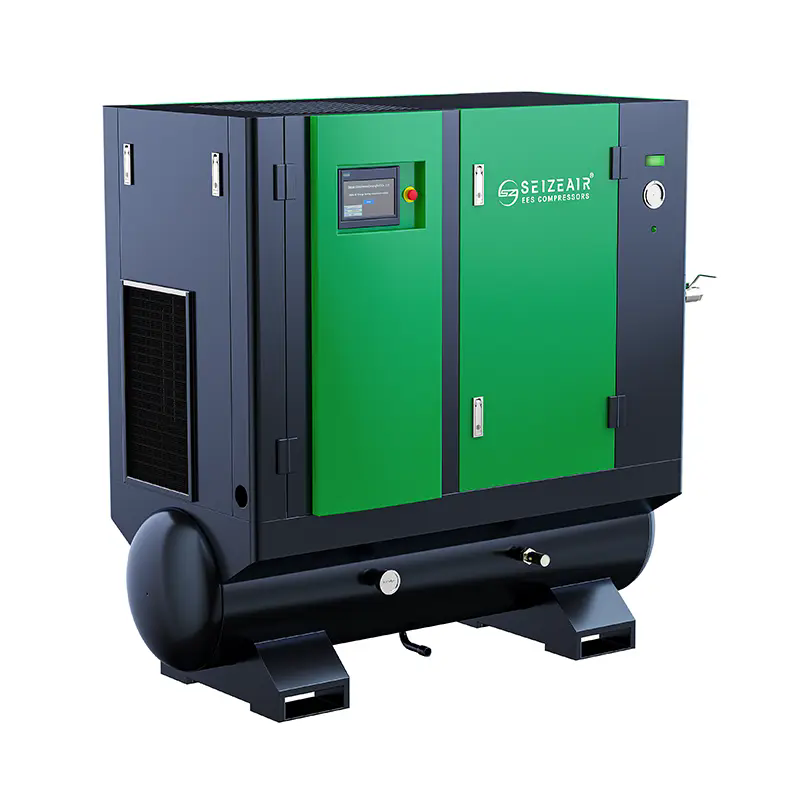
Food Grade Oil-free Air Compressor

This article explains how a Food Grade Oil-free Air Compressor works, why it is important for food processing industries, what challenges it solves, and how businesses can choose the right compressed air equipment. It also introduces the advantages of solutions provided by Seize International Trading (Shanghai) Co., Ltd., helping manufacturers improve production safety, efficiency, and product quality.


Table of Contents


1. What Is a Food Grade Oil-free Air Compressor?

A Food Grade Oil-free Air Compressor is a specialized compressed air system designed to produce clean air without using oil inside the compression chamber. Unlike traditional compressors that rely on lubricating oil to reduce friction, oil-free compressors use alternative technologies and specially engineered components to prevent oil contamination.

In food production environments, compressed air often comes into direct contact with ingredients, packaging materials, processing equipment, and finished products. Any oil vapor, particles, or chemical residue in the air stream may affect product quality and create safety concerns.

Therefore, food manufacturers require compressed air that meets strict hygiene requirements. A food-grade oil-free solution helps companies maintain cleaner production processes while reducing contamination risks.


2. How Does a Food Grade Oil-free Air Compressor Work?

The working principle of a Food Grade Oil-free Air Compressor focuses on generating compressed air without oil entering the compression process. The compressor draws in atmospheric air, compresses it through specially designed compression components, and delivers purified compressed air to production equipment.

Working Stage Description Production Benefit
Air Intake The compressor absorbs surrounding air through filtration systems. Reduces dust and airborne particles entering the system.
Compression Process Air is compressed without oil lubrication inside the compression chamber. Prevents oil contamination.
Air Treatment Moisture and impurities are controlled through filtration and drying systems. Improves air cleanliness and equipment reliability.
Air Delivery Clean compressed air is supplied to production lines. Supports safe food manufacturing operations.

Because no oil participates in the compression process, manufacturers can significantly reduce the possibility of oil migration into products or production equipment.


3. Why Is Oil-free Compressed Air Important for Food Industries?

Food and beverage manufacturers face strict requirements regarding hygiene, contamination prevention, and production consistency. Compressed air is widely used in many processes, including filling, packaging, mixing, cleaning, and automation.

If compressed air contains oil particles, it may create several problems:

  • Contamination of food products and packaging materials.
  • Reduced product shelf life caused by impurities.
  • Difficulty maintaining hygiene standards.
  • Increased production risks and quality inspection failures.
  • Additional costs for air purification and maintenance.

A Food Grade Oil-free Air Compressor helps manufacturers create a safer production environment by providing clean and stable compressed air.


4. What Production Problems Can Oil-free Air Compressors Solve?

Many food manufacturers experience challenges when using conventional compressed air systems. Understanding these issues helps companies select more suitable equipment.

Common Challenge Possible Impact Oil-free Solution
Oil contamination risk Product quality problems and safety concerns. Provides oil-free compressed air generation.
High cleaning requirements More downtime and operational expenses. Reduces contamination-related cleaning work.
Unstable air quality Affects production consistency. Maintains cleaner air output.
Strict industry standards Higher compliance pressure. Supports hygienic manufacturing environments.

5. Key Features of a Reliable Food Grade Oil-free Air Compressor

A high-quality Food Grade Oil-free Air Compressor should provide more than oil-free operation. Manufacturers should consider several important characteristics when evaluating equipment.

  • Oil-free compression technology: Ensures compressed air does not contain oil from the compression chamber.
  • Stable air supply: Supports continuous production processes.
  • Energy efficiency: Helps reduce long-term operating costs.
  • Low maintenance design: Simplifies daily operation and servicing.
  • Durable components: Improves equipment lifespan in demanding environments.
  • Quiet operation: Creates a more comfortable workplace environment.

Seize International Trading (Shanghai) Co., Ltd. focuses on providing reliable compressed air solutions designed to meet the needs of modern industrial users, including applications requiring high air purity.


6. Food Grade Oil-free Air Compressor vs Oil-lubricated Compressor

Comparison Factor Food Grade Oil-free Air Compressor Oil-lubricated Compressor
Oil contamination risk Extremely low because no oil is used in compression. Higher possibility of oil particles entering air output.
Food industry suitability Suitable for food and beverage applications. Requires additional filtration systems.
Maintenance requirements Designed for clean production environments. Requires regular oil replacement and monitoring.
Air purity Provides cleaner compressed air. May require additional treatment equipment.

7. How to Choose the Right Food Grade Oil-free Air Compressor?

Selecting the correct compressor requires careful evaluation of production requirements, air demand, and environmental conditions.

  1. Determine required airflow: Calculate the compressed air consumption of all connected equipment.
  2. Check pressure requirements: Select a compressor that matches the operating pressure needed for production.
  3. Evaluate air quality standards: Confirm that the compressor can meet hygiene requirements.
  4. Consider operating environment: Temperature, humidity, and installation space can influence performance.
  5. Choose a reliable supplier: Work with experienced manufacturers and suppliers who understand industrial applications.

8. Common Applications in Food and Beverage Manufacturing

Food Grade Oil-free Air Compressors are widely used in various production processes where clean air is essential.

  • Food packaging systems
  • Beverage filling equipment
  • Bakery production lines
  • Dairy processing facilities
  • Food sorting and automation systems
  • Cleaning and air-blowing applications
  • Ingredient handling equipment

These applications require reliable compressed air because even small contaminants can influence product quality.


9. Maintenance Tips for Long-term Performance

Although oil-free compressors reduce contamination risks, regular maintenance remains important for stable operation.

  • Clean or replace air filters regularly.
  • Check cooling systems to prevent overheating.
  • Inspect pipelines for leakage.
  • Monitor operating pressure and airflow.
  • Follow manufacturer maintenance recommendations.
  • Keep the installation environment clean and dry.

Proper maintenance improves efficiency, extends equipment service life, and ensures consistent compressed air quality.


10. Frequently Asked Questions

Q1: Why do food factories need an oil-free air compressor?

Food factories need oil-free compressors because compressed air may directly contact products or packaging. Removing oil from the compression process helps reduce contamination risks.

Q2: Is a Food Grade Oil-free Air Compressor completely maintenance-free?

No. Although it does not require oil replacement, regular inspections, filter maintenance, and system checks are still necessary.

Q3: Can oil-free compressors be used for beverage production?

Yes. They are commonly used in beverage filling, packaging, and automation processes where clean compressed air is required.

Q4: What makes Seize International Trading (Shanghai) Co., Ltd. a suitable supplier?

Seize International Trading (Shanghai) Co., Ltd. provides professional compressed air solutions with a focus on product reliability, application requirements, and customer needs.

Q5: How can companies improve compressed air efficiency?

Companies can improve efficiency by selecting properly sized compressors, reducing air leakage, maintaining filtration systems, and using equipment designed for specific industrial requirements.


Conclusion

A Food Grade Oil-free Air Compressor plays an essential role in modern food manufacturing by providing clean, reliable, and safe compressed air. From reducing contamination risks to improving production stability, oil-free technology helps companies meet higher quality expectations.

With professional solutions from Seize International Trading (Shanghai) Co., Ltd., businesses can achieve more efficient compressed air systems designed for demanding food-grade applications. For reliable equipment selection and customized compressed air solutions, please contact us today to discuss your requirements and find the right solution for your production needs.

Related News
Leave me a message
X
We use cookies to offer you a better browsing experience, analyze site traffic and personalize content. By using this site, you agree to our use of cookies.Privacy Policy
RejectAccept