No. 188 Jinliu Road, High-tech Zone, Jinshan District, Shanghai City, China +86-15001719145 sales@seize-air.com
Follow Us -
News

How Can a Fixed-Speed Single-Stage Screw Air Compressor Improve Industrial Air Supply?

2026-08-24 0 Leave me a message

Article Summary: A Fixed-Speed Single-Stage Screw Air Compressor can be an effective solution for factories that require a stable and continuous supply of compressed air. Unlike variable-speed systems that continuously adjust motor speed according to demand, a fixed-speed compressor operates at a consistent rotational speed and is particularly suitable for facilities with predictable air consumption. This article explains how the technology works, where it performs best, how to select the right capacity, how to control operating costs, and how proper maintenance can improve reliability. It also examines the practical differences between fixed-speed and VSD compressors so plant managers can make a better equipment decision based on actual operating conditions.

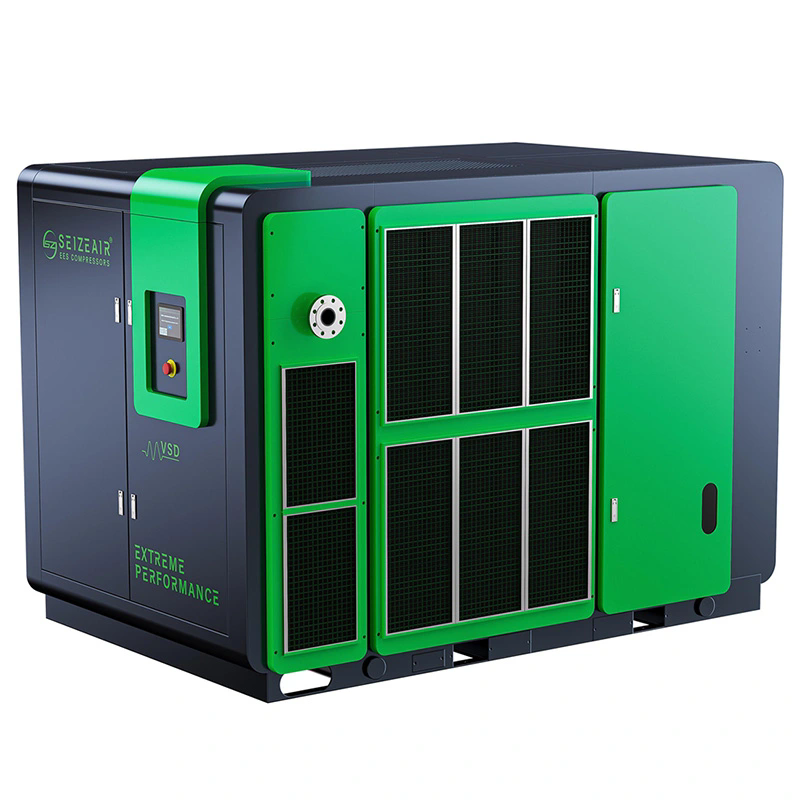
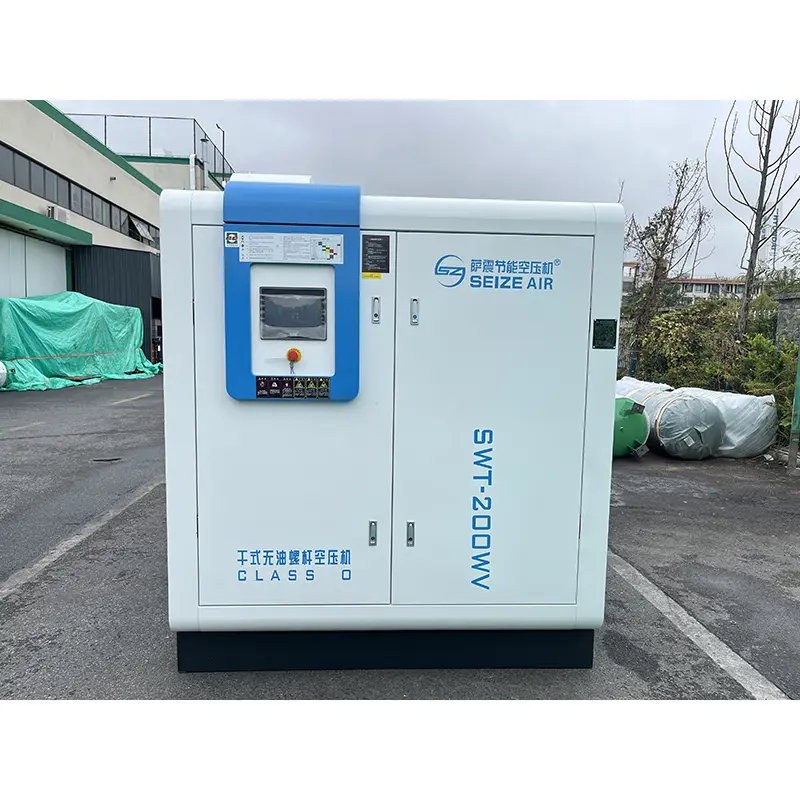
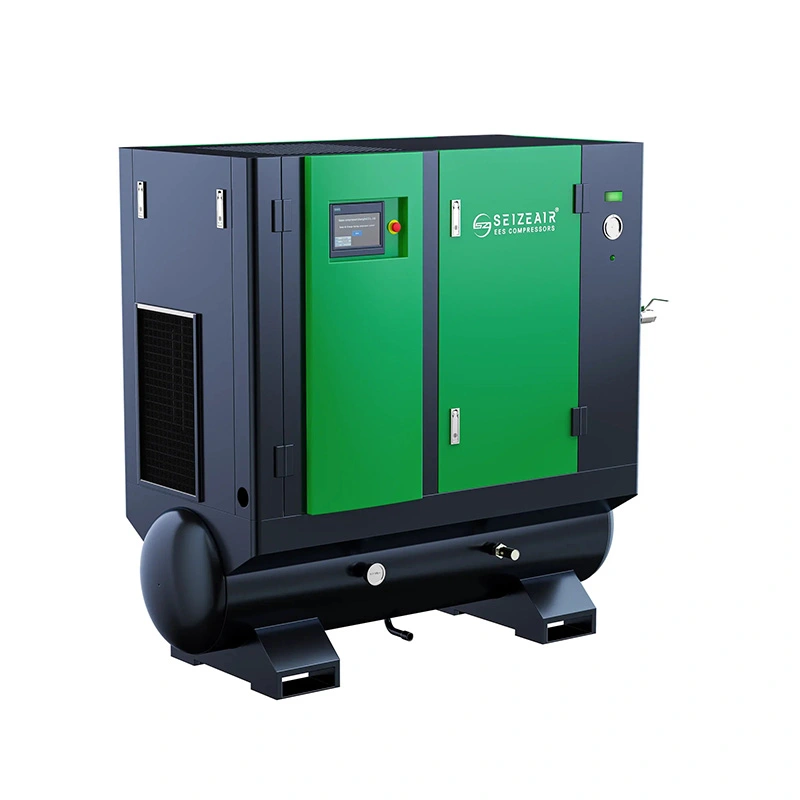
20HP Fixed-Speed Single-Stage Screw Air Compressor

Table of Contents


1. What Is a Fixed-Speed Single-Stage Screw Air Compressor?

A Fixed-Speed Single-Stage Screw Air Compressor is an industrial compressed-air machine designed to deliver a dependable flow of air at a relatively constant motor speed. It uses twin screw rotors to draw in atmospheric air, compress it within the air end, and discharge the compressed air to the plant system.

The term fixed-speed describes the motor operating concept. Instead of continuously changing motor speed to match fluctuations in demand, the compressor runs at a predetermined speed. The term single-stage means the air is compressed through one primary compression stage before leaving the air end.

This configuration is especially practical when a production facility has a relatively stable compressed-air requirement. Examples include manufacturing lines that operate continuously, pneumatic conveying systems with predictable demand, and production equipment that consumes compressed air throughout most of a shift.

The important point is that a fixed-speed compressor is not automatically the best choice for every factory. Its economic advantage becomes stronger when the compressor spends a large proportion of its operating time under substantial load. Selecting equipment according to the actual load profile is therefore more important than simply choosing the newest control technology.


2. How Does the Compressor Work?

The operating sequence of a screw compressor is straightforward but depends on several components working together correctly.

  1. Air intake: Atmospheric air enters through the inlet system and passes through an air filter that removes contaminants.
  2. Compression: The air enters the screw air end, where two intermeshing rotors progressively reduce the available volume.
  3. Oil management: In an oil-injected screw compressor, oil is introduced during compression to assist with sealing, cooling, and lubrication.
  4. Air-oil separation: The compressed mixture enters the separator system, where most of the oil is separated from the compressed air.
  5. Cooling: Heat generated during compression is managed through the cooling system before the compressed air enters the downstream network.
  6. Control: A load/unload control strategy regulates compressor operation according to system pressure and demand.

Because the motor operates at a constant speed, the compressor does not need to repeatedly accelerate and decelerate the motor to compensate for every small change in demand. This relatively simple operating concept can be advantageous in demanding industrial environments where durability and straightforward maintenance are important.

However, system design remains critical. A compressor cannot compensate for an undersized air receiver, excessive pressure losses, leaking piping, or improperly selected downstream equipment. The entire compressed-air system should therefore be evaluated rather than looking at the compressor in isolation.


3. What Are the Main Benefits?

For facilities with stable compressed-air demand, a Fixed-Speed Single-Stage Screw Air Compressor can provide several practical advantages.

Stable Compressed-Air Delivery

Consistent motor operation makes the configuration suitable for production environments where compressed-air consumption remains relatively predictable. Stable air availability can help pneumatic equipment maintain reliable operating conditions.

Lower Initial Equipment Cost

Fixed-speed systems generally have a simpler electrical and control architecture than variable-speed systems. Depending on the application, this can reduce the initial investment and make the equipment attractive for facilities focused on capital expenditure.

Robust Mechanical Design

Industrial screw compressors are designed for continuous operation. When correctly sized and maintained, the combination of a heavy-duty motor, screw air end, cooling system, oil circuit, and separation system can support demanding production schedules.

Maintenance Simplicity

A relatively straightforward control architecture can make routine servicing easier for maintenance teams. Common service activities include replacing filters, checking oil condition, inspecting separators, cleaning coolers, and monitoring drive components.

Strong Base-Load Performance

One of the most important advantages appears when the compressor operates close to its rated capacity for much of the working day. Under these conditions, the machine can provide a dependable base-load air supply without paying for variable-speed hardware that may provide limited value in a consistently high-load application.


4. Which Industrial Applications Suit It Best?

The best application is one in which compressed-air demand is relatively steady rather than constantly changing.

Application Typical Air Requirement Why Fixed-Speed Can Be Suitable
Metal Fabrication Medium to high Continuous pneumatic tools and production equipment can create a stable base load.
Glass Manufacturing High and continuous Long production cycles can require uninterrupted compressed air.
Textile Production Medium to high Air-consuming machinery may operate for extended shifts with predictable demand.
Packaging Lines Medium Pneumatic actuators and automation systems can maintain consistent demand.
General Manufacturing Medium to high Suitable when plant demand remains relatively stable during production.
Construction Material Production High Rugged equipment can be advantageous in demanding industrial environments.

Facilities with severe variations in air consumption should not automatically choose a fixed-speed compressor. In such cases, combining a fixed-speed machine for the base load with a variable-speed compressor for changing demand may provide a more balanced system.


5. How Should You Select the Right Compressor?

Choosing a compressor solely by motor power is one of the most common purchasing mistakes. A more reliable approach is to evaluate the complete operating profile.

1. Determine Actual Air Demand

Start by identifying the plant's actual compressed-air consumption. Review production schedules, pneumatic equipment requirements, peak demand, average demand, and periods when production is stopped.

2. Confirm Required Working Pressure

Do not select a higher pressure simply because it appears to provide more capacity. Higher discharge pressure can increase energy consumption. Determine the minimum pressure required by the most demanding equipment and account for pressure losses throughout the distribution network.

3. Evaluate Operating Hours

A machine operating several thousand hours per year deserves a different evaluation from a compressor used intermittently. For continuous production, energy consumption and long-term service requirements should be considered alongside the purchase price.

4. Consider Ambient Conditions

Temperature, dust, humidity, ventilation, and installation location all influence compressor performance. A compressor room with inadequate ventilation can create excessive heat and shorten component life.

5. Check Electrical Conditions

Verify voltage, frequency, motor requirements, starting characteristics, and available electrical capacity before installation. Stable electrical infrastructure helps prevent avoidable operational problems.

6. Size the Air Receiver Correctly

An air receiver can help stabilize system pressure and reduce unnecessary compressor cycling. It should be selected according to compressor capacity, demand characteristics, pressure range, and control strategy rather than using an arbitrary tank size.


6. How Does Fixed-Speed Compare With VSD?

Fixed-speed and variable-speed drive compressors solve different operating problems. The correct choice depends on how compressed-air demand changes over time.

Factor Fixed-Speed VSD
Motor Speed Constant Adjustable
Best Application Stable and high air demand Variable air demand
Control Concept Load/unload or related fixed-speed control Speed modulation
Initial Investment Generally lower Generally higher
Load Variation Response Limited Excellent
Base-Load Operation Very suitable Suitable but may offer unnecessary flexibility for constant loads
System Strategy Can serve as a base-load compressor Can serve as a trim-load compressor

A common industrial strategy is to combine both technologies. A fixed-speed compressor can provide the stable minimum demand while a VSD compressor responds to fluctuations. This arrangement can be particularly useful in factories with continuous production but variable pneumatic demand.


7. How Can Operating Efficiency Be Improved?

Buying an efficient compressor is only the beginning. The surrounding compressed-air system has a major effect on total operating cost.

  • Repair air leaks: Small leaks can become a significant source of wasted compressed air when they remain in service for months or years.
  • Use the lowest practical pressure: Avoid operating at unnecessarily high pressure.
  • Keep filters clean: Excessive pressure drop across dirty filters forces the system to work harder.
  • Maintain proper cooling: Clean coolers and adequate ventilation help the compressor reject compression heat.
  • Control idle operation: Review load/unload settings and avoid unnecessary unloaded running.
  • Monitor pressure stability: Frequent pressure fluctuations may indicate inappropriate compressor control, inadequate storage, or distribution restrictions.
  • Match compressor capacity to demand: Oversizing can increase operating costs, while undersizing can cause pressure problems and excessive compressor loading.

Energy performance should be evaluated as a complete system. A compressor operating efficiently at the machine level can still produce high total costs if the plant has major leaks, excessive pressure drops, poor ventilation, or inefficient production practices.


8. How Can Maintenance Prevent Unexpected Downtime?

Preventive maintenance is essential for a compressor that supports continuous production. A maintenance schedule should be based on operating hours, manufacturer recommendations, environmental conditions, and actual machine condition.

Maintenance Area What to Check Potential Consequence of Neglect
Air Filter Inspect contamination and replace when necessary Restricted intake and reduced performance
Oil Filter Check condition and replace according to service requirements Poor oil circulation and component wear
Oil Check level, condition, and replacement interval Insufficient lubrication or overheating
Oil Separator Monitor pressure differential and condition Higher pressure loss and increased oil carryover
Cooler Keep surfaces clean and airflow unobstructed Elevated operating temperature
Belts or Coupling Inspect alignment, tension, and wear where applicable Power transmission losses or mechanical failure
Electrical System Inspect terminals, protections, and motor condition Electrical faults or unexpected shutdown

Maintenance records are also valuable. Recording operating hours, oil changes, filter replacement, discharge temperature, pressure, and unusual noise can help identify gradual changes before they become major failures.


9. What Common Problems Should Operators Watch For?

Several problems can affect fixed-speed screw compressor performance.

High Discharge Temperature

High temperature can result from inadequate ventilation, dirty coolers, unsuitable oil conditions, or excessive ambient temperature. The cooling system should be checked before the condition develops into a serious shutdown.

Low Air Output

Reduced output may be associated with clogged filters, inlet restrictions, incorrect operating conditions, leaks, or problems within the compression system. Measurements should be taken systematically rather than replacing components without diagnosis.

Frequent Loading and Unloading

Excessive cycling can indicate that the compressor is oversized for the current demand, that the air receiver is insufficient, or that control settings need adjustment.

Excessive Oil Carryover

Oil carryover may indicate separator problems, unsuitable oil levels, operating conditions outside the intended range, or maintenance issues. Since downstream processes can be sensitive to oil contamination, the cause should be investigated promptly.

Abnormal Noise or Vibration

Unusual mechanical noise or vibration should never be ignored. Possible causes include bearing wear, coupling problems, belt issues, alignment errors, or other mechanical conditions requiring inspection.


10. Why Consider SEIZE AIR?

SEIZE AIR provides compressed-air equipment for industrial applications and integrates research and development, manufacturing, sales, and after-sales support. The company states that it has more than 17 years of industry experience and more than 100 patents, with a focus on energy efficiency, environmental considerations, and intelligent compressed-air solutions.

Its Fixed-Speed Single-Stage Screw Air Compressor range is positioned for applications requiring reliable base-load compressed air. The product portfolio includes models covering different industrial power and pressure requirements, allowing users to select equipment according to their actual application rather than relying on a one-size-fits-all configuration.

SEIZE AIR also offers different compressor architectures, making it possible to develop a broader system strategy when a plant has both stable and fluctuating demand. For example, a fixed-speed compressor can handle the continuous base load while a VSD compressor manages changes in production demand.

When evaluating a compressor supplier, buyers should look beyond the machine itself. Technical support, spare-parts availability, maintenance guidance, customization capability, commissioning assistance, and long-term service can all affect the real value of an industrial compressor.


11. Frequently Asked Questions

What is the main advantage of a Fixed-Speed Single-Stage Screw Air Compressor?

Its primary advantage is dependable compressed-air production for applications with relatively stable demand. Its simpler architecture can also provide an attractive initial investment and straightforward maintenance.

Is a fixed-speed compressor suitable for 24/7 production?

Yes. Screw compressors are commonly used for continuous industrial operation when correctly sized, installed, cooled, lubricated, and maintained. A fixed-speed configuration can be particularly suitable when the compressed-air load remains consistently high.

When should a factory choose VSD instead?

A VSD compressor may be more appropriate when compressed-air demand changes substantially throughout production shifts. Its ability to adjust motor speed can help match compressor output more closely to changing demand.

Can fixed-speed and VSD compressors work together?

Yes. A combination of fixed-speed and VSD compressors can provide a practical plant strategy. The fixed-speed unit can supply the stable base load, while the VSD unit responds to variable demand.

What pressure options are commonly required?

Industrial systems can operate at different pressure levels depending on the application. The appropriate pressure should be determined by actual equipment requirements and distribution losses rather than selecting the highest available pressure.

How often should a screw compressor be serviced?

Service intervals depend on the compressor model, operating hours, lubricant, environment, and manufacturer recommendations. Filters, oil, separators, cooling components, and drive components should be inspected according to the prescribed maintenance schedule.

Does compressor room ventilation matter?

Yes. Compression produces substantial heat, and insufficient ventilation can raise ambient and discharge temperatures. Proper airflow and heat management are important for reliable operation and component life.

What is the biggest mistake when selecting a fixed-speed compressor?

Choosing the compressor solely according to nominal motor power is a common mistake. Buyers should evaluate air demand, pressure, operating hours, ambient conditions, peak consumption, storage capacity, and future production requirements.


12. Conclusion

A Fixed-Speed Single-Stage Screw Air Compressor remains a practical choice for industrial facilities that require stable, continuous compressed air. Its value is particularly clear in base-load applications where the compressor can operate at a substantial load for most of the production cycle.

The right selection requires more than comparing purchase prices or motor ratings. Plant managers should analyze the actual demand profile, required pressure, annual operating hours, ambient conditions, electrical infrastructure, storage capacity, maintenance requirements, and future production plans.

For facilities with predictable demand, a fixed-speed configuration can provide a strong combination of reliability, mechanical simplicity, and cost control. Where demand fluctuates significantly, a VSD compressor or a hybrid compressor arrangement may provide a better overall solution.

SEIZE AIR supports industrial compressed-air requirements with fixed-speed and variable-speed compressor solutions designed for different operating profiles. If you are planning a new compressed-air system, replacing an aging compressor, or looking for a reliable base-load solution, contact us to discuss your air demand, pressure requirements, operating conditions, and equipment configuration with the SEIZE AIR team.

Related News
Leave me a message
X
We use cookies to offer you a better browsing experience, analyze site traffic and personalize content. By using this site, you agree to our use of cookies.Privacy Policy