No. 188 Jinliu Road, High-tech Zone, Jinshan District, Shanghai City, China +86-15001719145 sales@seize-air.com
Follow Us -
News

What Is the Compressed Air-as-a-Service Model? The Business Logic Behind Zero-Upfront-Cost Air Supply

2026-09-10 0 Leave me a message

For medium and large manufacturing companies with high compressed air demand, compressed air is an essential utility for continuous production. Building and operating an in-house compressor station, however, usually requires a significant upfront investment, followed by ongoing electricity and maintenance costs. Once the equipment reaches the end of its service life, its residual value may also be limited.

The compressed air-as-a-service model addresses this situation by allowing companies to use compressed air without purchasing the compressor equipment themselves. Instead, they pay according to the amount of compressed air they actually consume.

What Is the Compressed Air-as-a-Service Model?

The compressed air-as-a-service model is essentially an application of Energy Management Contracting (EMC) to compressed air systems.

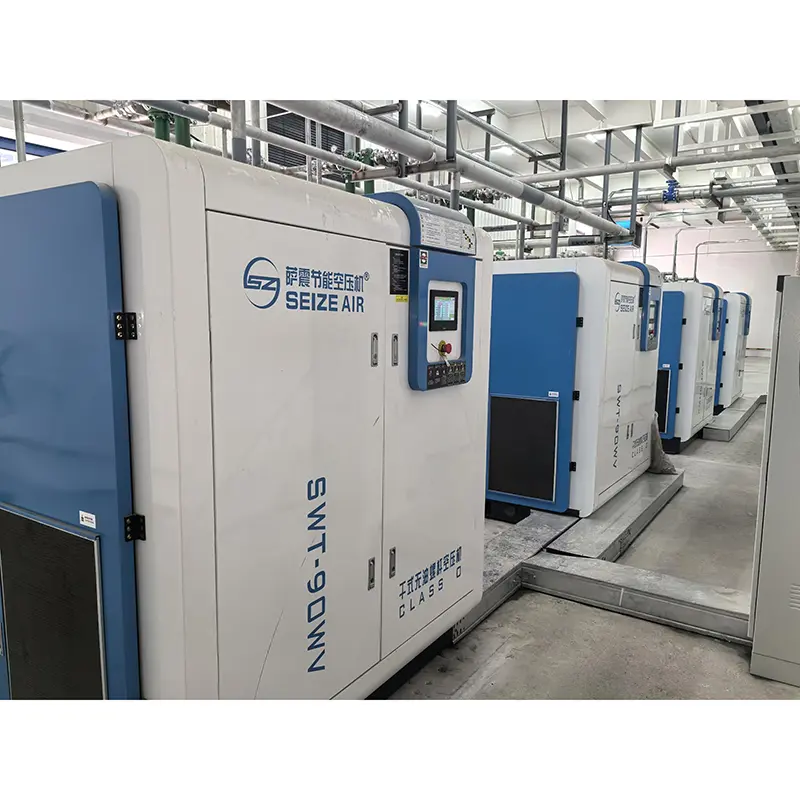
Under this model, a service provider installs a complete compressed air station at the customer's facility and takes responsibility for subsequent maintenance, intelligent monitoring, and equipment upgrades. The customer does not need to purchase the compressor equipment and instead pays according to actual compressed air consumption, such as cubic meters of air supplied or an agreed energy-based measurement.

In simple terms, a company does not need to build its own power plant to use electricity or its own water plant to use water. In the same way, compressed air can be treated as an energy service rather than a fixed asset that the customer has to purchase and manage.

This is the fundamental difference between an air compressor service model and the traditional equipment sales model.

Why Do Companies Choose to Use Compressed Air Without Owning the Equipment?

The difference between conventional equipment ownership and a compressed air service model can be considered from several cost and operational perspectives.

Comparison Traditional Equipment Ownership Compressed Air-as-a-Service
Initial investment Significant equipment purchase cost No compressor equipment purchase required
Maintenance Customer is responsible for maintenance and operation Maintenance is handled by the service provider
Energy performance Efficiency may decline as equipment ages Equipment can be upgraded according to operating requirements
Asset risk Customer bears depreciation and replacement risk Equipment remains under the service provider's responsibility

For a medium or large factory with substantial compressed air demand, moving to a service-based model can reduce the financial burden associated with equipment ownership and allow capital to remain available for core production activities.

The actual economic benefit depends on factors such as compressed air consumption, operating hours, electricity costs, equipment configuration, and contract terms.

How Does the Service Provider Make the Model Economically Viable?

A common question is how a service provider can install and operate compressor equipment without requiring the customer to purchase the machines.

The business model generally relies on three elements: energy efficiency, economies of scale, and long-term service contracts.

Energy Efficiency

Technologies such as permanent magnet variable-speed drives, two-stage compression, and coordinated compressor control can reduce the specific energy consumption of compressed air generation compared with older equipment.

The service provider can therefore build its operating model around improving the energy efficiency of the compressed air station while sharing part of the resulting economic benefit with the customer.

Lifecycle Management

An intelligent monitoring platform can track compressor operating conditions and support preventive maintenance. Regular maintenance and equipment upgrades can help maintain the operating efficiency of the station over the service period.

This also allows the service provider to manage equipment utilization, maintenance requirements, and replacement planning at the system level.

Reliable Air Supply

Compressed air availability is another important part of the service.

Redundant compressor configurations and coordinated switching can provide additional capacity when individual units require maintenance or when air demand increases. This reduces the customer's need to manage equipment redundancy and emergency maintenance independently.

The basic commercial structure is therefore linked to operating efficiency and service continuity: the service provider has an incentive to keep the compressed air system efficient and available, while the customer pays for the compressed air service rather than owning and maintaining the equipment.

Which Companies Are Suitable for the Compressed Air Service Model?

The model is primarily suited to companies with large and relatively stable compressed air demand.

Because the service provider invests in equipment and takes responsibility for operation and maintenance, sufficient long-term air consumption is important for making the project economically viable.

Typical applications may include:

●Textile and chemical fiber production

●Food processing

●Chemical manufacturing

●Lithium battery production

●Automotive manufacturing

●Other medium and large continuous-production facilities

The model can also be considered by companies that prefer not to allocate substantial capital to compressor equipment or do not maintain a dedicated compressed air operation and maintenance team.

On the other hand, small facilities with limited or intermittent compressed air demand may find conventional equipment purchase or individual equipment rental more suitable.

The key factors are the volume and stability of compressed air demand, rather than company size alone.

How Does a Compressed Air Service Project Start?

A typical project can be divided into four stages:

1. Energy and compressed air assessment

The service provider evaluates the customer's existing equipment, air demand, operating hours, pressure requirements, and energy consumption.

2. System design and economic evaluation

Based on the measured operating conditions, the provider develops a compressed air station configuration and calculates the expected operating costs and potential savings.

3. Equipment installation and commissioning

The service provider installs and commissions the compressor station and associated equipment.

4. Service operation and pay-per-use settlement

After commissioning, the customer pays according to the agreed compressed air consumption or settlement method while the service provider manages the equipment operation and maintenance.

This process allows the customer to review the expected economics of the project before committing to long-term operation.

Frequently Asked Questions

Who pays the electricity cost under the compressed air service model?

Under a typical service arrangement, the service provider is responsible for the electricity and operating costs associated with the compressor station. The customer pays according to the agreed compressed air consumption and settlement terms.

The exact cost structure depends on the commercial contract.

What happens if the factory expands and compressed air demand increases?

The system can be designed with capacity expansion in mind. Additional compressor capacity can be introduced according to changes in actual air demand, subject to the site conditions and service agreement.

What happens if a compressor fails?

A service provider can use remote monitoring, fault alarms, maintenance response, and redundant compressor capacity to reduce the impact of equipment failures. The actual response mechanism and service commitment should be defined in the contract.

How long is a typical service contract?

Compressed air service projects are generally based on medium- to long-term agreements. Contract duration, billing method, service scope, and termination conditions should be agreed according to the customer's air consumption, industry, site conditions, and project economics.

Is Compressed Air-as-a-Service Suitable for Your Factory?

The compressed air service model can be worth evaluating when a factory has high and relatively stable air demand, long operating hours, and a preference for reducing upfront equipment investment.

Before selecting a service model, the most useful data includes:

●Existing compressor capacity and configuration

●Required working pressure

●Average and peak air consumption

●Daily and annual operating hours

●Current electricity consumption

●Existing compressor maintenance costs

●Production schedule and expected capacity changes

●Available installation space

A technical assessment based on actual operating data provides a more reliable basis for comparing equipment ownership with a compressed air service model.

Related News
Leave me a message
X
We use cookies to offer you a better browsing experience, analyze site traffic and personalize content. By using this site, you agree to our use of cookies.Privacy Policy
RejectAccept