No. 188 Jinliu Road, High-tech Zone, Jinshan District, Shanghai City, China +86-15001719145 sales@seize-air.com
Follow Us -
Products
Industrial Fixed-Speed Single-Stage Screw Air Compressor
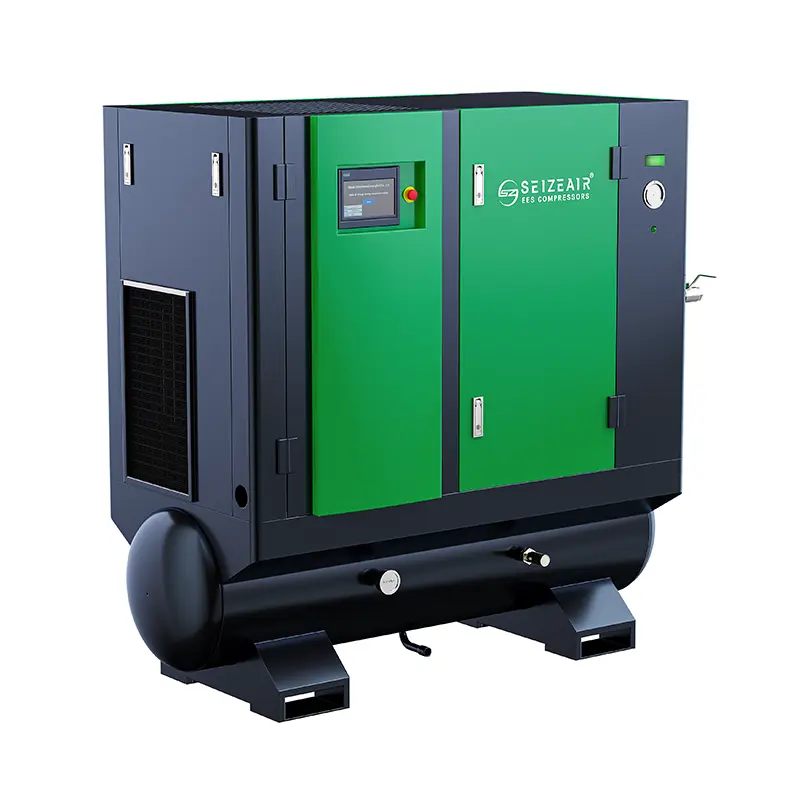
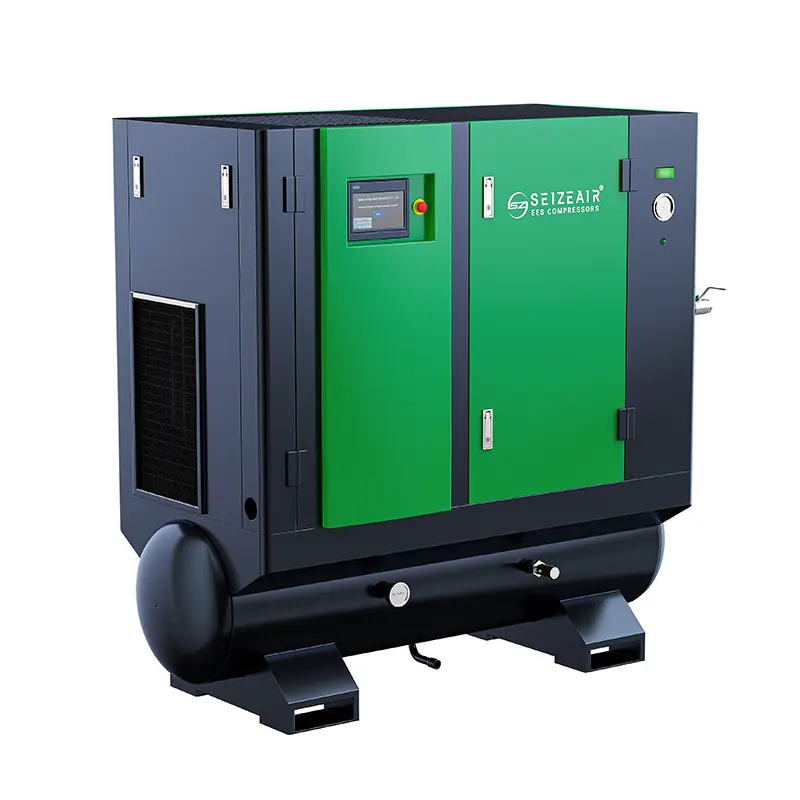
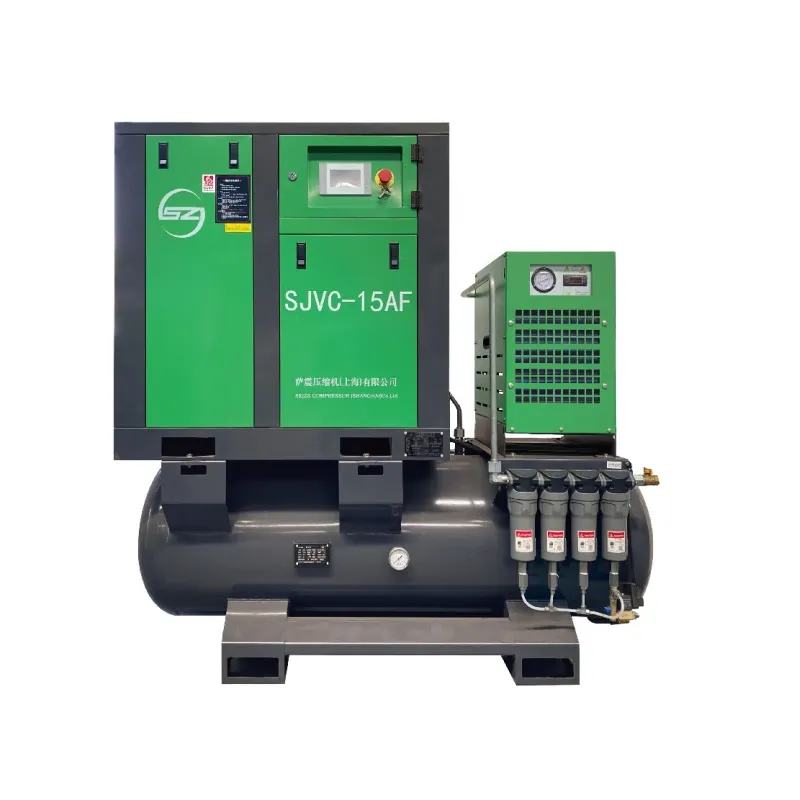
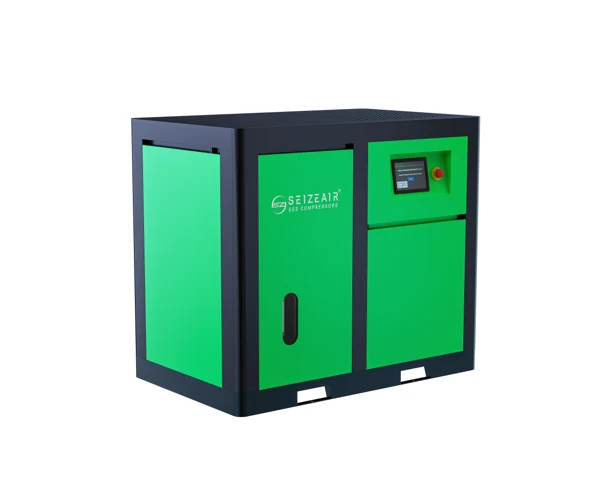
  • Industrial Fixed-Speed Single-Stage Screw Air CompressorIndustrial Fixed-Speed Single-Stage Screw Air Compressor
  • Industrial Fixed-Speed Single-Stage Screw Air CompressorIndustrial Fixed-Speed Single-Stage Screw Air Compressor
  • Industrial Fixed-Speed Single-Stage Screw Air CompressorIndustrial Fixed-Speed Single-Stage Screw Air Compressor
  • Industrial Fixed-Speed Single-Stage Screw Air CompressorIndustrial Fixed-Speed Single-Stage Screw Air Compressor

Industrial Fixed-Speed Single-Stage Screw Air Compressor

Industrial Fixed-Speed Single-Stage Screw Air Compressor for steady industrial air demand, with pressure-specific SZ-D airflow data, package dimensions and practical station-planning guidance.

    The Industrial Fixed-Speed Single-Stage Screw Air Compressor gives production teams a practical starting point for a steady factory air load. SEIZE AIR combines oil-injected screw compression with a packaged cabinet, while the SZ-D selection table lets an engineer compare air delivery at the actual working pressure. This page focuses on the choice that matters on a running production floor: matching a repeatable demand to a suitable compressor, then designing the receiver, treatment and distribution around that duty.

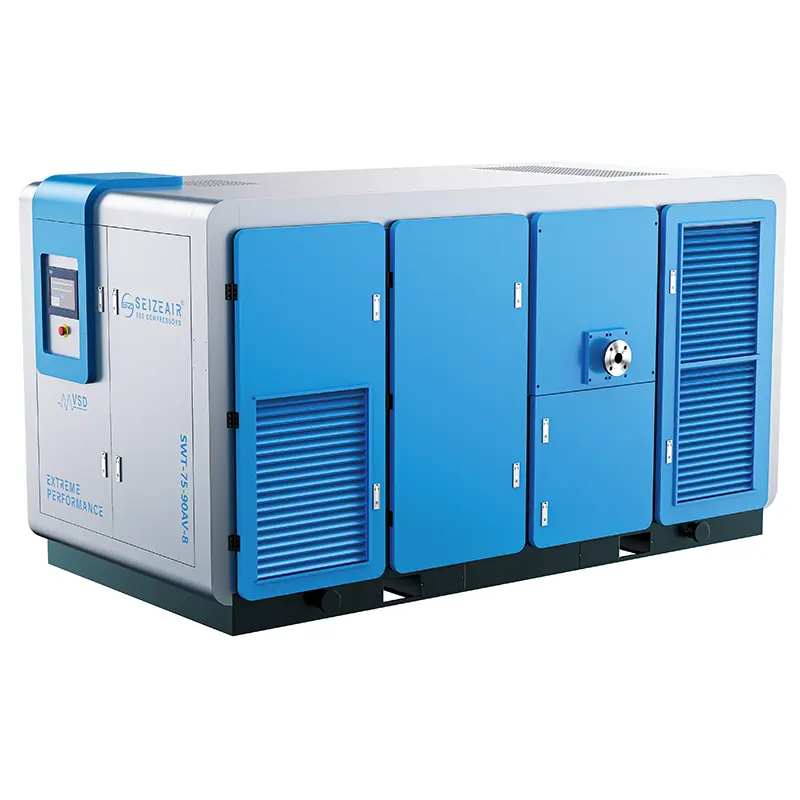
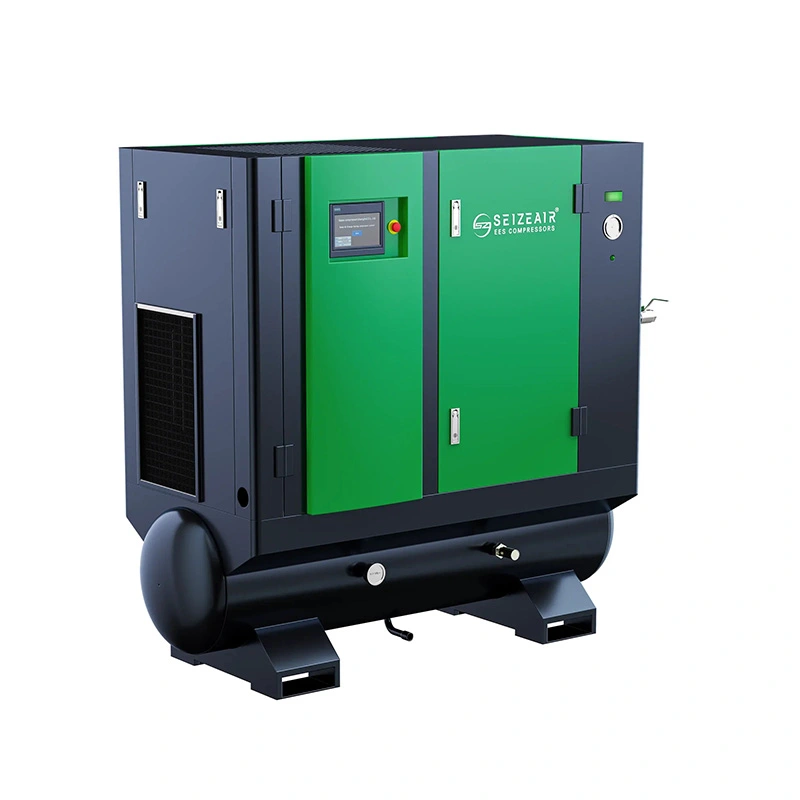
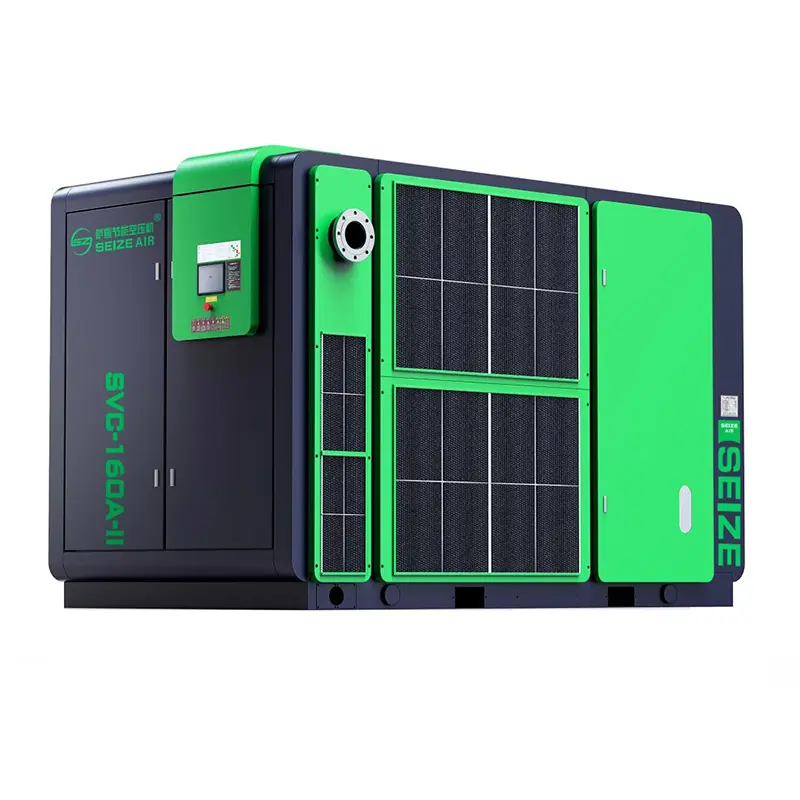
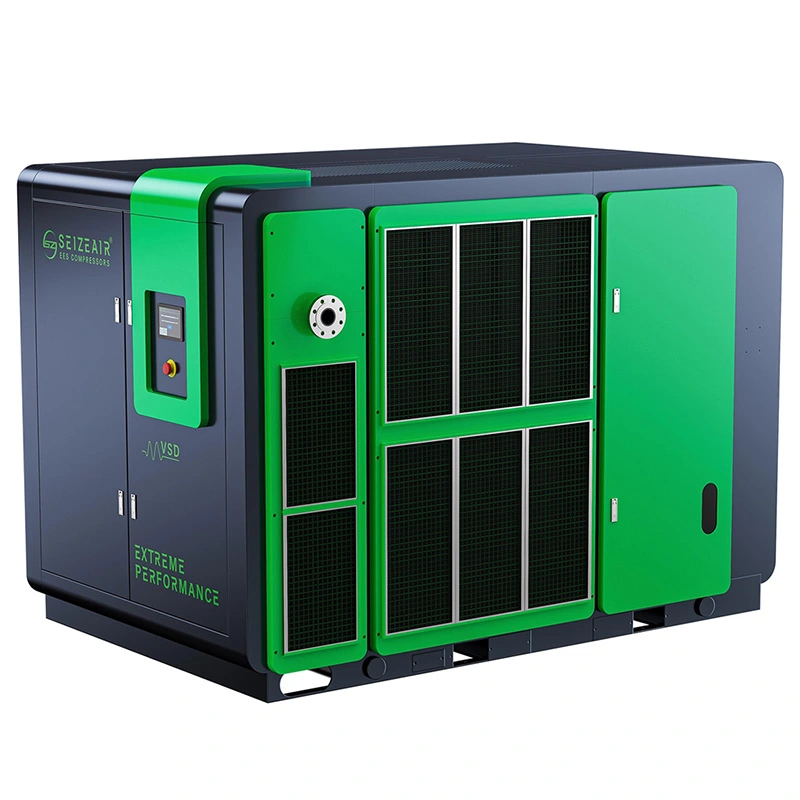
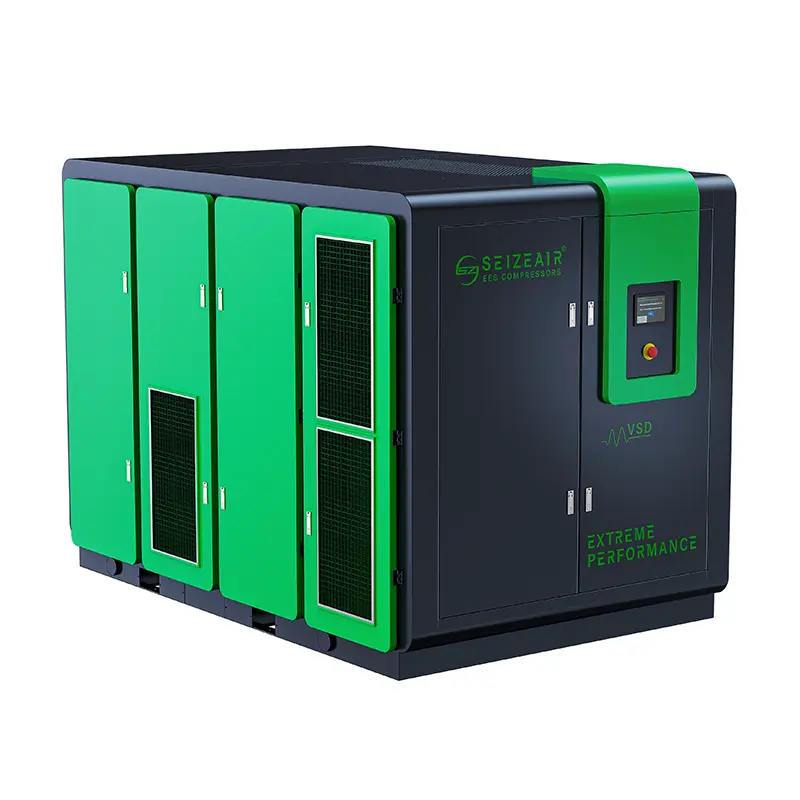
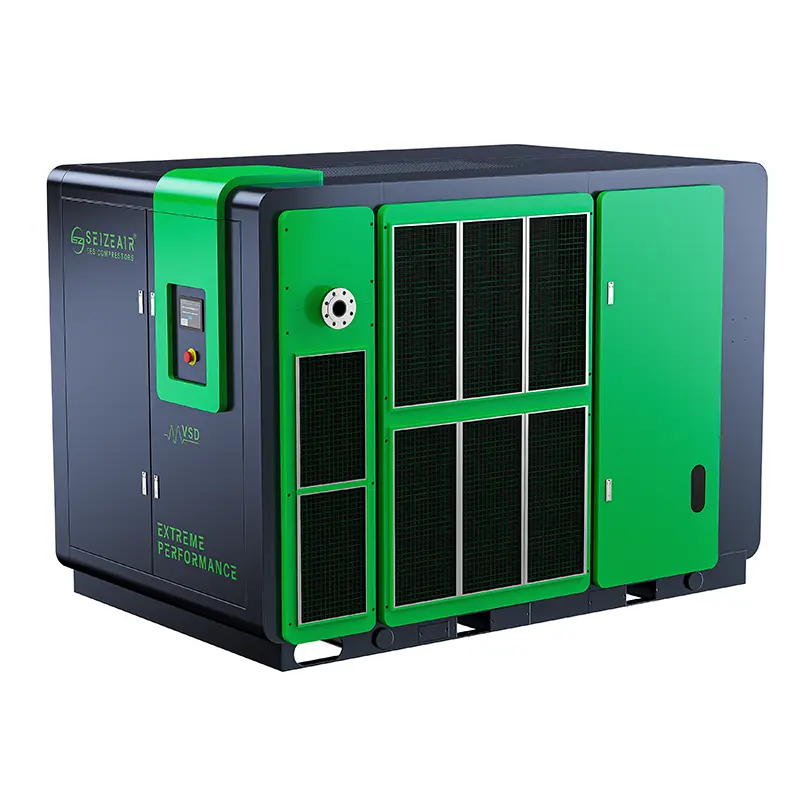
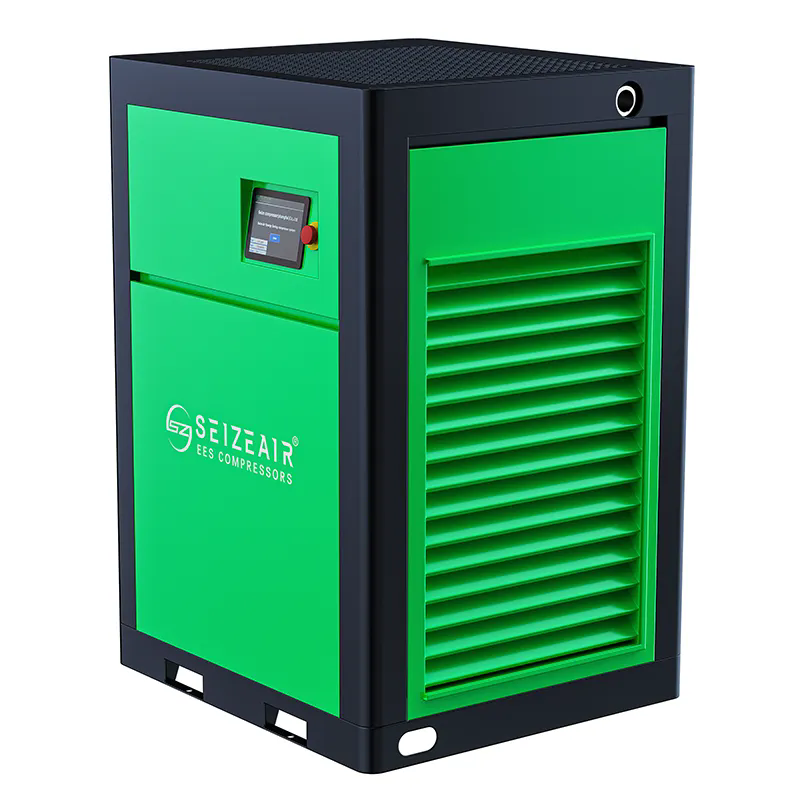
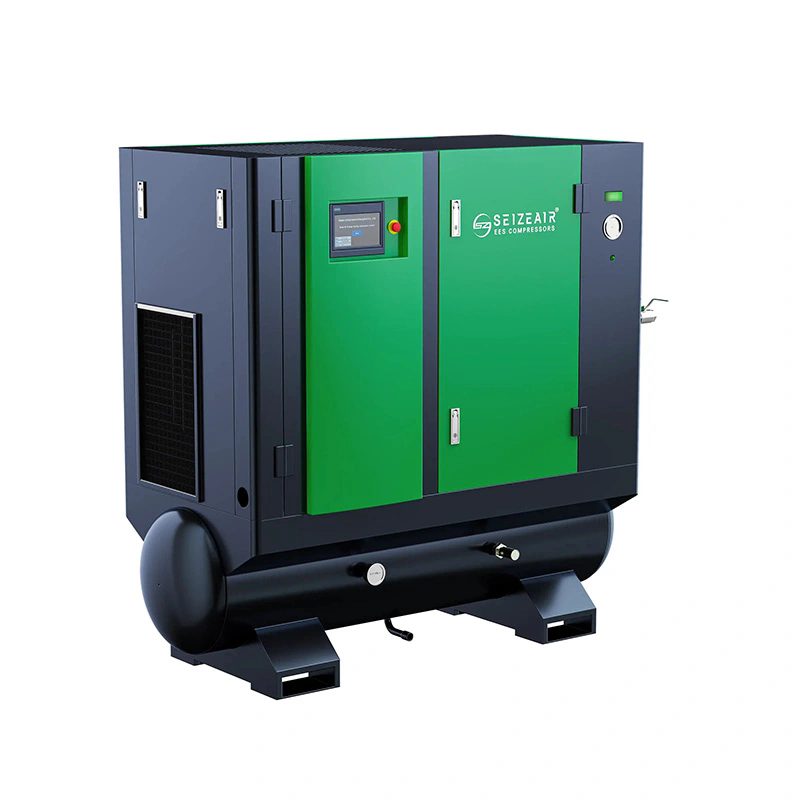
    Complete SEIZE AIR fixed-speed single-stage compressor cabinet
    Complete-machine illustration from the fixed-speed single-stage product imagery; shown as a series exterior.

    A straightforward package for a steady production load

    What single-stage compression means for your air supply

    Air enters a screw airend, where rotating elements reduce the volume of the trapped air and raise its pressure through a single compression stage. In this oil-injected design, lubricant supports cooling, sealing and lubrication within the compression process. The oil and air must subsequently be separated, and the lubricant returns through its circuit. The package therefore contains a connected compression and fluid-management system, rather than simply an electric motor attached to an outlet.

    For a buyer, this distinction helps define the complete supply. The compressor supplies compressed air; a receiver provides storage, and downstream equipment manages the air condition required at the user. These items work together, but they answer different questions. A machine with sufficient catalogue air delivery can still feed an unsuitable installation if the downstream treatment or distribution has been selected for a different duty.

    Where fixed-speed operation makes sense

    Fixed-speed selection deserves attention when production has a sustained, repeatable air requirement and the compressor can spend useful operating time serving that demand. Examples to evaluate include pneumatic assembly equipment, workshop utility networks and production machines operating through a consistent shift. These are application patterns to assess against your own consumption, rather than a claim that every machine in those industries has the same air requirement.

    Begin with the minimum, usual and highest simultaneous demand during real production. Include the periods when equipment is available but idle. If the duty changes substantially between product batches or shifts, compare another control approach alongside the fixed-speed proposal. The right decision depends on how the installation operates across the working day, not on the simplicity of the drive description alone.

    A base-load machine and a changing-load machine have different jobs

    In a station with several compressors, an individual machine does not have to follow every change in demand. A fixed-speed unit may serve a consistent portion of the load while another machine handles variation. The station design must establish which machine leads, which follows and what happens when production demand drops below the intended combination's useful operating range.

    Treat that division as an engineering task during selection. Describe the existing machines, their control settings and the production conditions under which each operates. Adding a new compressor without reviewing the operating sequence can leave machines working against overlapping pressure settings. Defining the intended role before purchase makes the quotation more useful and gives commissioning a clear objective.

    The useful benefit is a defined operating duty

    An Industrial Fixed-Speed Single-Stage Screw Air Compressor is most persuasive when its proposal answers a specific production need: the required flow at the required pressure, the available installation space and the control role in the station. Those details give purchasing and engineering teams a shared basis for comparing offers.

    Keep the motor rating, package air delivery and installation requirements together in the enquiry. A lower purchase price does not explain whether two proposals serve the same operating point. Equally, a larger motor rating does not by itself establish a better match. A well-defined duty helps avoid paying for capacity that cannot be used productively or discovering that a quoted machine was selected at a different pressure.

    SZ-D performance data you can use for selection

    Read across a pressure row before comparing models

    The following figures come from the fixed-speed technical sheet in the English SEIZE AIR single-stage catalogue, PDF page 16, printed page 12. Each air-delivery entry belongs to the working-pressure column above it. Motor power is the published motor rating; it is not a measurement of total package input during a particular factory's operating cycle.

    The table deliberately keeps the same pressure columns across the selection. That makes it possible to compare machines without mixing a low-pressure flow from one model with a higher-pressure flow from another. A dash retains an unlisted entry in the source table. It should remain an open selection point, rather than becoming a value estimated from an adjacent row.

    Model Motor kW / Hp FAD at 7 bar, m³/min FAD at 8 bar, m³/min FAD at 10 bar, m³/min FAD at 12.5 bar, m³/min
    SZ-8D 5.5 / 7.5 0.90 0.85 0.75 0.45
    SZ-10D 7.5 / 10 1.20 1.10 1.00 0.80
    SZ-15D 11 / 15 1.90 1.80 1.50 1.10
    SZ-20D 15 / 20 2.70 2.60 2.50 1.70
    SZ-30D 22 / 30 3.70 3.50 3.40 2.40
    SZ-50D 37 / 50 6.50 6.30 6.20 —
    SZ-75D (W) 55 / 75 10.80 10.60 — 6.50
    SZ-100D (W) 75 / 100 12.50 12.20 12.00 10.60

    The reference conditions behind the figures

    The catalogue identifies free air delivery for the complete package in accordance with ISO 1217 Annex C, with absolute inlet pressure of 1 bar and intake temperature of 20°C. Use that reference basis when comparing offers. An air-volume figure with a different reference condition cannot automatically be placed beside these values as an equivalent capacity.

    The mechanical table below gives the associated package dimensions, published weight and air outlet. Dimensions describe the cabinet envelope, not the complete floor area needed for maintenance, ducting and connection work. Keep the operating and mechanical tables together when preparing a shortlist, because an acceptable flow rating is only part of a workable installation.

    Model Air outlet L × W × H, mm Weight, kg
    SZ-8D G¾ 760 × 760 × 1065 320
    SZ-10D G¾ 760 × 760 × 1065 350
    SZ-15D G¾ 1200 × 750 × 1050 450
    SZ-20D G¾ 1200 × 750 × 1050 500
    SZ-30D G1 1350 × 850 × 1170 600
    SZ-50D G1½ 1580 × 920 × 1220 1200
    SZ-75D (W) G2 1700 × 1180 × 1650 1500
    SZ-100D (W) G2 1850 × 1250 × 1650 1800

    Follow a single model across its pressure choices

    The SZ-20D illustrates why pressure belongs in the selection conversation. Its published motor rating is 15 kW / 20 Hp. The listed FAD is 2.70 m³/min at 7 bar, 2.60 m³/min at 8 bar, 2.50 m³/min at 10 bar and 1.70 m³/min at 12.5 bar. Those are separate pressure configurations within the table, not one universal air-delivery rating.

    If your equipment requires the higher pressure, use the corresponding flow when assessing supply. Do not buy from the largest number in the row and assume that output accompanies every pressure setting. Conversely, establish the actual production requirement before selecting a higher-pressure configuration, because that choice changes the capacity available from the same named model.

    Compare adjacent sizes at the same pressure

    At 8 bar, the table lists 2.60 m³/min for the SZ-20D, 3.50 m³/min for the SZ-30D and 6.30 m³/min for the SZ-50D. Their motor ratings are 15, 22 and 37 kW respectively. This comparison gives a practical shortlist once the simultaneous demand and future equipment plan are understood.

    The mechanical change is also substantial. The SZ-20D has a published envelope of 1200 × 750 × 1050 mm and weight of 500 kg, while the SZ-50D is listed at 1580 × 920 × 1220 mm and 1200 kg. A purchasing decision between these machines therefore affects handling, access and the proposed station layout as well as airflow. Discuss both consequences before the layout is approved.

    Keep model suffixes and missing entries intact

    The larger entries retain the catalogue designations SZ-75D (W) and SZ-100D (W). Preserve those complete identifiers when requesting a quotation, drawing or technical confirmation, so that the offered configuration can be checked against the intended source entry. A shortened model name is less useful when several configurations share a family designation.

    For SZ-75D (W), the fixed-speed table leaves the 10 bar airflow entry blank. It still provides 10.80 m³/min at 7 bar, 10.60 m³/min at 8 bar and 6.50 m³/min at 12.5 bar. The unlisted combination calls for a confirmed offer from SEIZE AIR. Interpolating between the surrounding figures would turn a selection table into an unsupported specification.

    What the package contains, and why it matters

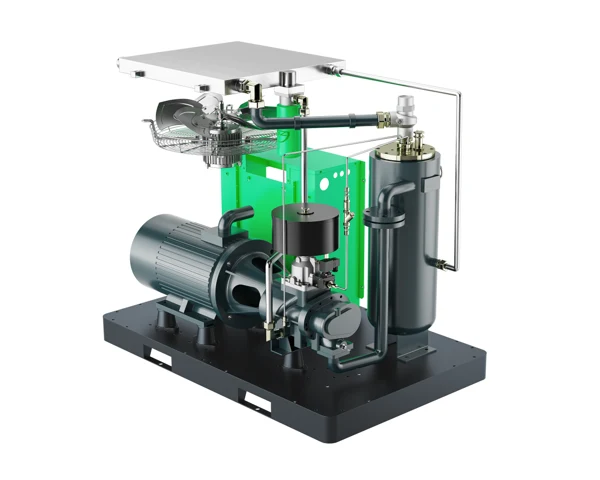
    Single-stage compressor internal motor and compression assembly
    Internal arrangement showing the motor, compression assembly and fluid-management components.

    The airend and drive establish the compression task

    The airend and motor form the core of the package, but their successful application depends on the selected pressure and the way the machine is operated. For procurement, connect the model selection to the required duty rather than judging the assembly from its appearance or motor size. Keep the selected air-delivery figure on the same line as the quoted working pressure.

    The internal product illustration shows how the drive, compression assembly and fluid-management components occupy the package. It is useful for discussing service access and the arrangement of the main systems. For the selected order, the approved drawing should identify the relevant connections and cabinet details, allowing the installation contractor to coordinate the actual package with the surrounding equipment.

    Oil circulation and separation support different functions

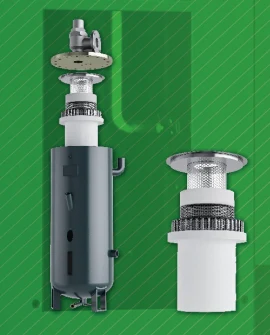
    Lubricant circulating through an oil-injected screw compressor has a different purpose from the air treatment installed downstream. The internal circuit supports the compression process, while separation returns lubricant from the air-and-oil mixture. A dryer or downstream filter then addresses its own specified treatment task within the plant's delivered-air system.

    This distinction helps avoid a common purchasing shortcut: describing the compressor as though its internal separator resolves every air-quality requirement. Define particles, moisture and oil requirements at the relevant point of use, then choose a treatment arrangement appropriate to those requirements. If the intended process requires oil-free compression itself, review the corresponding oil-free product family rather than relying on the name of a downstream filter.

    Oil and air separation assembly illustration
    Separation assembly illustrated in the single-stage catalogue; a component view supporting the oil-circuit discussion.

    Cooling requires a route out of the room

    Heat removed from the compression process must leave the installation. The cabinet and cooler arrangement is therefore only one part of the cooling design. Air entering the machine should have a clear path, and discharged hot air should not return directly to the intake or feed another machine's inlet. A room can appear spacious while still creating an unfavourable recirculation path.

    Show the proposed intake, exhaust and neighbouring equipment on the layout supplied with the enquiry. If ducting is planned, include its route and the available installation space so that the arrangement can be reviewed for the offered machine. Keep cooling-air access and maintenance access visible on the same drawing, because a duct or wall that solves one problem can obstruct another task.

    Controls need a clear relationship with the station

    The operating interface gives the operator a way to observe the machine and respond to its state. In a station, the important question extends beyond the appearance of the panel: which pressure signal governs operation, where is that signal taken and how does it relate to the other compressors? These details shape the behaviour the production team will see.

    Include any requirement for remote observation, station sequencing or integration with existing equipment in the enquiry. Define the information and actions needed instead of assuming that a particular communication function is included because a display is visible. The resulting control description should tell the commissioning team how the selected compressor participates in normal production, reduced demand and a planned transfer of duty.

    Match the machine to the way your production uses air

    Separate sustained consumption from short demand events

    A production line may have a steady air requirement with occasional short events, such as simultaneous actuator movement or a timed cleaning operation. Another line may impose a continuous additional load throughout a product run. Those patterns can produce similar complaints about pressure, yet they have different consequences for compressor sizing and storage.

    Record when the demand begins, how it relates to the production sequence and whether pressure recovers while the event continues. A brief event that finishes before recovery has a different character from a process that holds the supply below its required pressure throughout operation. Give SEIZE AIR that operating description alongside the equipment list, so the proposed capacity and receiver arrangement address the actual pattern.

    Pneumatic equipment needs pressure at its connection

    The pressure required by a machine belongs at the equipment connection under the relevant operating condition. Between the compressor and that connection sit treatment equipment, piping, valves and potentially flexible hoses or local regulators. Their contribution becomes visible when air is flowing; a static reading during a production stop tells only part of the story.

    For a workshop network or assembly area, identify the most demanding connection and the most distant or restricted branch. Observe the supply during the operations that matter to production. This produces a stronger selection basis than taking the highest pressure printed on any piece of equipment and using it as the station target without considering the distribution arrangement.

    Receiver selection belongs beside the control discussion

    A receiver provides air storage and affects the pressure response of the connected system. Its contribution depends on its position, the usable pressure range, demand pattern and connection arrangement. It does not change the compressor's sustained air-delivery capability. Treat storage as part of the system design instead of a substitute for sufficient capacity during a continuous process.

    For a new installation, show whether the receiver is intended before or after relevant treatment equipment and which demand it serves. For an extension, identify the receiver already installed and whether the added equipment shares that storage. The control settings, vessel arrangement and treatment flow path should describe the same operating system when the proposal is reviewed.

    Account for changes between shifts and production campaigns

    A stable daytime process can coexist with a much smaller overnight requirement. It can also be interrupted by product changes, maintenance or shifts during which only part of the line operates. These periods matter because a machine selected for the busiest production state will encounter a different demand when equipment is idle.

    List the actual production states and the air users that remain active in each. If there are several compressors, establish a suitable operating combination for each state and a procedure for transitions. This makes the fixed-speed proposal easier to evaluate against a variable-speed alternative or a different station arrangement, while keeping the comparison grounded in your production schedule.

    Define reserve capacity as an operating arrangement

    Production continuity involves more than choosing a larger compressor. Consider what happens when a machine is isolated for maintenance, whether another supply can serve the essential users and how the plant transfers duty. A reserve unit has practical value only if the valves, controls, connections and available utilities support the intended changeover.

    Keep the normal operating case and the reserve case separate in the enquiry. Specify which air users must continue and which may stop during maintenance. This allows the supplier to distinguish the capacity needed in routine production from the capacity needed during an unavailable-machine condition, and gives the plant an understandable basis for planning isolation and servicing.

    Plan the installation before the cabinet arrives

    Use the machine envelope to begin a workable layout

    Start with the published length, width and height of the shortlisted model, then add the tasks that must take place around it. Operators need to reach the controls, technicians need access to service items and the installation needs routes for piping, cabling and cooling air. The cabinet footprint is therefore a starting boundary for planning rather than the finished room allocation.

    Consider how a service component would be removed without dismantling unrelated plant equipment. Check doors, adjacent machines, cable trays and planned ductwork together. A layout review carried out before purchase can resolve a conflict on a drawing, while the same conflict discovered after installation can interrupt production or require physical alterations to the room.

    Confirm the delivery route as well as the final position

    Published package weight helps start the handling discussion, but the delivery plan must use the final supplied package and its approved handling instructions. Review the route from the unloading position to the machine's intended location. Door openings, corners, floor transitions and the space available to handling equipment can each matter even when the final room is large enough.

    Give the delivery and installation teams the same approved machine information. If the equipment must pass through an existing production area, establish the required access arrangements and production coordination before it arrives. These practical preparations let the compressor selection move from a paper specification to an installation that the plant can receive and place safely.

    Match the electrical offer to the site supply

    The English catalogue lists a standard supply of 380 V / 50 Hz / three-phase and notes that other voltages are available. Provide the actual site voltage, frequency and phase with the enquiry, then require the offered configuration to state its electrical supply clearly. The catalogue's standard entry should not be treated as confirmation of a different export configuration.

    Installation design also needs the selected machine's electrical documents, starting arrangement and protection requirements. The motor kW column alone does not establish every cable, switching or protective-device requirement. Coordinate the final electrical scope with the applicable machine documentation and the site's responsible electrical team before the equipment is connected.

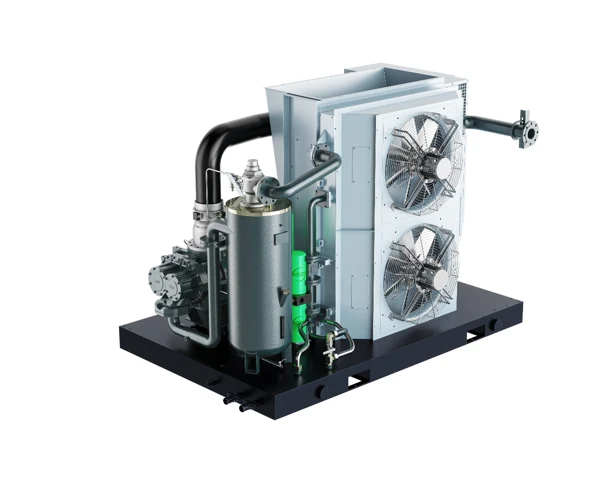
    Fixed-speed single-stage package cooler and connecting pipework
    Open package illustration highlighting cooler position and connecting pipework; a larger-frame series arrangement.

    Keep condensate and service connections accessible

    The installation must provide a practical way to manage collected condensate from the relevant air-system equipment. Identify the actual drain points and the route for their discharge, including the plant's handling requirements. Do not leave drain access as a task to solve after piping and nearby equipment have filled the available space.

    Include the compressor outlet, receiver, treatment connections and isolation arrangement on a coordinated sketch. This helps distinguish the connections supplied with the machine from those provided by the installation contractor. Clear boundaries make the quotation easier to review and reduce uncertainty when the compressor package and other air-system equipment are delivered by different parties.

    Manufacturing and quality behind the selection

    SEIZE AIR brings manufacturing and product engineering together

    Seize Compressor (Shanghai) Co., Ltd. was founded in 2009 and is based in Shanghai. As an air compressor manufacturer in China, SEIZE AIR combines product development, manufacturing, marketing and service in its company offering. For a buyer, the useful connection is between the selected compressor duty and the supporting technical information needed to install and operate it.

    The factory's published manufacturing information identifies Japanese OKUMA machining equipment, German KAPP profile-grinding equipment and German Leitz coordinate measurement. These capabilities support the discussion of component manufacture and dimensional control. When reviewing a purchase, connect the manufacturing background to the selected model, the agreed technical specification and the documents supplied for that order.

    Inside SEIZE AIR: company and manufacturing overview.

    Precision statements should describe the relevant process

    The single-stage catalogue identifies an OKUMA five-axis machining centre with positioning accuracy of ±1.5 μm/m, and KAPP gear profile grinding with radial runout of no more than 2 μm. Its machining-control information also lists rotor-profile tolerance of ±3 μm and bearing-seat coaxiality of 0.005 mm. These are published equipment and process-control statements, useful for understanding the manufacturing approach.

    They serve a different purpose from the airflow table or a completed package test. A procurement review can make good use of both: manufacturing information explains how critical parts are produced and checked, while the selected package specification describes the machine being purchased. Keeping those roles clear produces a stronger technical conversation than treating a machining figure as an air-delivery guarantee.

    Agree what the inspection record needs to establish

    Discuss the inspection and acceptance documents needed for your project before the order is finalised. The selected model, pressure configuration, electrical supply and supplied scope should be traceable through the relevant paperwork. Where the project requires a particular witnessed procedure or additional acceptance activity, include that requirement in the commercial and technical discussion.

    The reference to ISO 1217 Annex C in the catalogue describes the basis used for published free air delivery. It helps align the capacity comparison. The inspection arrangement for an individual purchase should then identify the applicable procedure and record, giving the buyer a practical means of checking that the agreed machine configuration and documentation accompany the equipment.

    Compare delivered scope instead of isolated headline figures

    A supplier comparison becomes much more useful when each offer identifies the same working pressure, air-delivery basis, electrical configuration and included equipment. Add the installation interfaces, required documentation and service scope to that comparison. Differences can then be resolved before price is treated as the deciding factor.

    The Industrial Fixed-Speed Single-Stage Screw Air Compressor can be evaluated as a complete production utility package: selected duty, physical installation, treatment interfaces and operating role. That approach gives engineering a technically comparable shortlist and gives purchasing a clearer explanation of what the quoted amount includes, including any equipment or work that remains within the customer's installation scope.

    Commissioning, routine operation and useful fault information

    Make first operation a check against the agreed duty

    Commissioning should connect the installed equipment with the operating condition used during selection. Confirm the delivered model and electrical configuration, review the installed connections and establish how the machine is intended to operate within the station. The applicable machine instructions and authorised commissioning procedure govern the specific work.

    Observe the system under a representative production state, not only while the factory is idle. Record the compressor and relevant user pressures together, the equipment operating at that time and any installed treatment in service. This gives the plant a useful baseline and helps distinguish a later change in production demand from a change in the machine or distribution system.

    Record operating states in a way another person can interpret

    A useful operating record explains the circumstances around a reading. Note the production state, whether the compressor was supplying the intended duty, and the displayed information relevant to the observation. A pressure value without a measurement position or production condition is difficult for another person to interpret.

    Use the same measurement locations when investigating a later complaint. If the plant has changed a filter, added equipment or altered station settings, keep that change with the record. This makes service communication more efficient and helps the team identify whether the problem appeared at the compressor, across treatment equipment or only on a particular branch of the distribution network.

    Observation Compare during the same event Selection or service question
    User pressure falls but station pressure holds Readings before and after treatment and along the affected branch Is there a local restriction or an undersized distribution route?
    Station pressure falls with a production change Operating users, compressor state and duration of the added demand Is the event temporary or a sustained capacity requirement?
    Machine spends more time without productive supply Production schedule and station operating combinations Has the sustained load or control role changed?
    Temperature-related indication appears Displayed event, cooling path and recent room changes Has intake or heat rejection been obstructed?

    Plan service around the applicable machine instructions

    Routine servicing should follow the documentation for the supplied configuration, including the specified consumables and maintenance tasks. Identify the machine model and relevant component before ordering replacements, and keep the service record with the equipment. A generic service kit description is less reliable than a parts reference matched to the actual package.

    Provide physical access for the work and define how the machine is isolated from connected systems. In a production station, maintenance planning should also identify which supply serves essential users while the selected compressor is unavailable. That preparation makes servicing an organised operating task rather than an unexpected interruption when access or reserve supply has not been considered.

    Prepare a service enquiry that leads to a useful response

    When asking for technical assistance, send the machine identification, the displayed event or symptom, and the operating condition in which it occurs. Add relevant photographs that show the connection or component being discussed, together with the maintenance or installation changes made before the observation. This information gives the service team a clear starting point.

    Avoid changing several settings or components simply to see whether the symptom disappears. An understandable record of the original condition and subsequent authorised actions is more useful for diagnosis. The aim is to relate the event to a specific system function while maintaining the equipment's required operating and safety procedures.

    Questions to resolve before requesting your quotation

    Can a fixed-speed compressor serve a variable production schedule?

    It can be part of a suitable station, but the proposal needs to account for the different production states. Identify the sustained demand, reduced-demand periods and any other compressors available. A fixed-speed machine serving a defined base load is a different application from the same machine expected to follow the entire variation alone.

    Ask for a comparison based on that operating pattern. The important outcome is an understandable machine combination and control role for each state, rather than selecting a drive type from a general statement about an industry. A production schedule and a simultaneous-user list give that comparison a much firmer basis.

    Does a higher pressure rating give more useful air?

    The required pressure should be established at the user under operating conditions. The SZ-D table shows why a higher pressure rating is not a substitute for greater air delivery: each model has its own listed flow at each pressure configuration. Select the pressure needed by the process, then assess capacity in the corresponding column.

    If the issue is a pressure loss in a particular branch or across treatment equipment, increasing the station target does not identify its cause. Compare readings along the affected route during the same demand event. This separates a distribution issue from a compressor-capacity question before a new purchase is based on the wrong problem.

    Is downstream treatment still needed?

    Select treatment from the air-quality requirement at the actual point of use. An oil-injected screw package and its internal oil separation perform defined compression-system functions; they do not replace the specification for delivered-air particles, moisture and oil. State those requirements and the relevant operating conditions in the enquiry.

    Also describe any receiver, dryer and filters already installed. Their flow basis, pressure loss and condition matter when they remain part of the proposed system. The objective is a coordinated air supply, with each item selected for its task and the treatment arrangement understood by both the equipment supplier and the production team.

    What information makes a quotation specific to your plant?

    Send the required working pressure and air demand, the production schedule, site electrical supply, installation location and existing air-system arrangement. Include the shortlisted SZ-D model if one has already been identified, along with any reserve-supply or documentation requirements. Photographs and a simple layout can clarify access and connection constraints that a written equipment list may miss.

    Ask SEIZE AIR to connect the model selection, supplied scope and installation interfaces in the offer. That makes the Industrial Fixed-Speed Single-Stage Screw Air Compressor quotation actionable for purchasing, engineering and the installation contractor. Your team can then review a defined air-supply solution with the relevant performance data, rather than a cabinet price detached from the production duty it must serve.

    Send Inquiry
    Contact Info
    For inquiries about Oil-Injected Screw Air Compressor, Oil-Free Screw Air Compressors, Gear-Type Centrifugal Air Compressor or price list, please leave your email to us and we will be in touch within 24 hours.
    X
    We use cookies to offer you a better browsing experience, analyze site traffic and personalize content. By using this site, you agree to our use of cookies. Privacy Policy
    RejectAccept